

White collar
Everybody sells a bit. Nobody owns the pipeline.
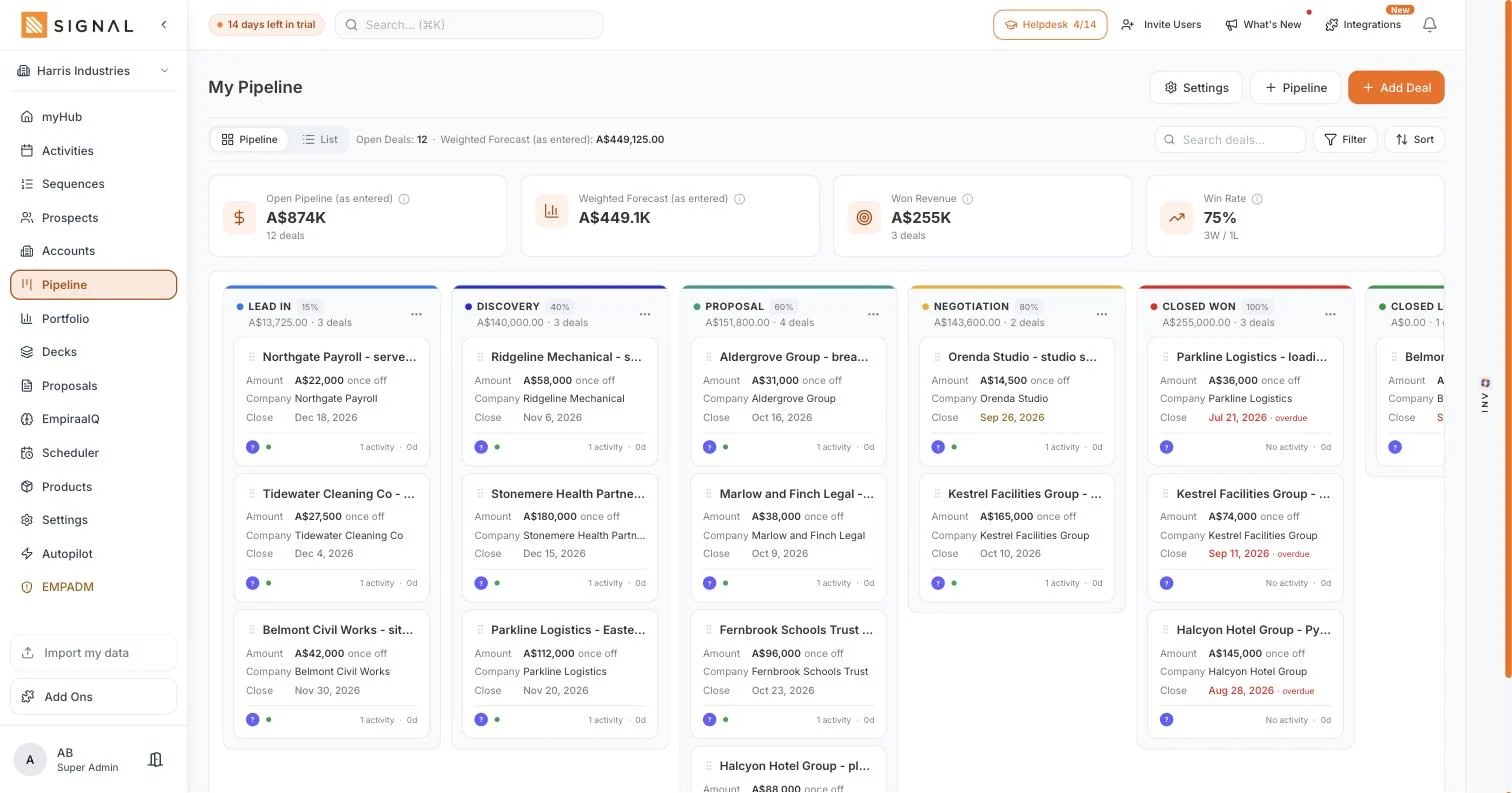
In most office-based businesses selling is somebody’s second job. A director has one conversation, a consultant has another, and what is actually in play this quarter cannot be answered without a meeting to assemble it. Signal puts all of it in one place, and keeps it moving through the months when the delivery work wins.
14 days free. No credit card.
- 14 days free
- No credit card
- Unlimited users
The problem
Part-time selling produces a part-time pipeline.
Not because anyone is bad at it. Because nothing holds it together between the people doing it.
Three familiar failures
The pipeline is four inboxes
Everything anyone knows about a live opportunity is in the thread they had, so the only way to see the quarter is to ask four people and add it up by hand.
A busy month stops it dead
Delivery wins, because delivery has deadlines and business development does not. Eight weeks later the quiet arrives and it looks like bad luck rather than arithmetic.
The proposal takes a fortnight
Scoping, pricing, rewriting the last one. By the time it lands the client has read somebody else’s and formed a view.
How it works
One pipeline, and it does not need a full-time owner.
The quarter
Everyone in it, because seats are free
Every plan includes unlimited users, so the directors, the consultants and whoever takes the enquiry all work in the same pipeline. Leaving people out to keep a bill down is exactly how conversations end up in four inboxes.
- Unlimited users on every plan, metered on the workspace
- One record per client, whoever had the conversation
- Owners on accounts, so two people never chase the same prospect
Follow-up that survives the busy month
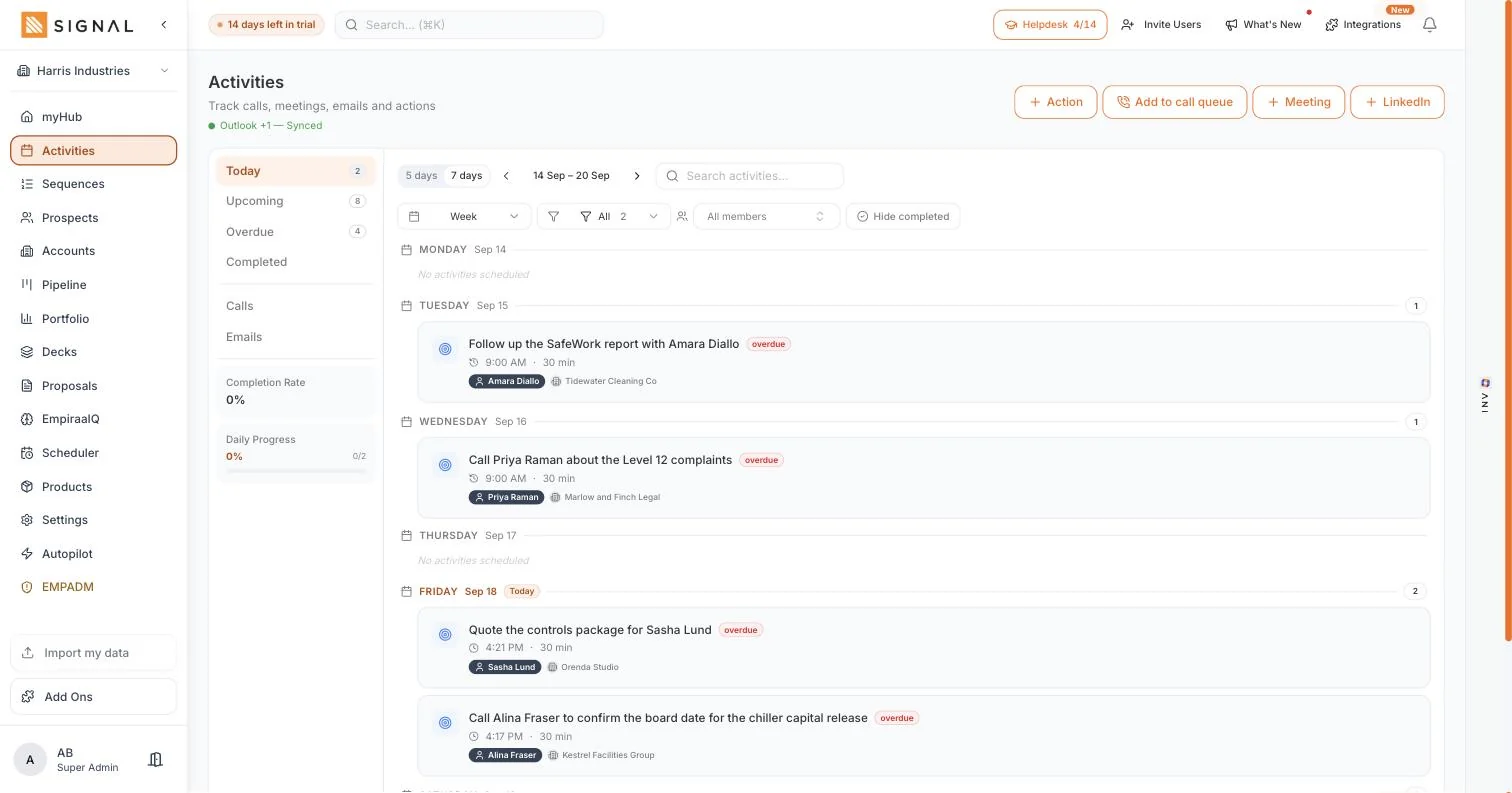
A next step on every opportunity, overdue in front of you, and a day list that takes four minutes to read. Sequences keep a conversation going from your own inbox when nobody has time to write one by hand.
- Overdue first, because that is where the work quietly leaks away
- Sequences from your own address, stopping the moment somebody replies
- Meetings booked with a link rather than six emails
And proposals out while it is still warm
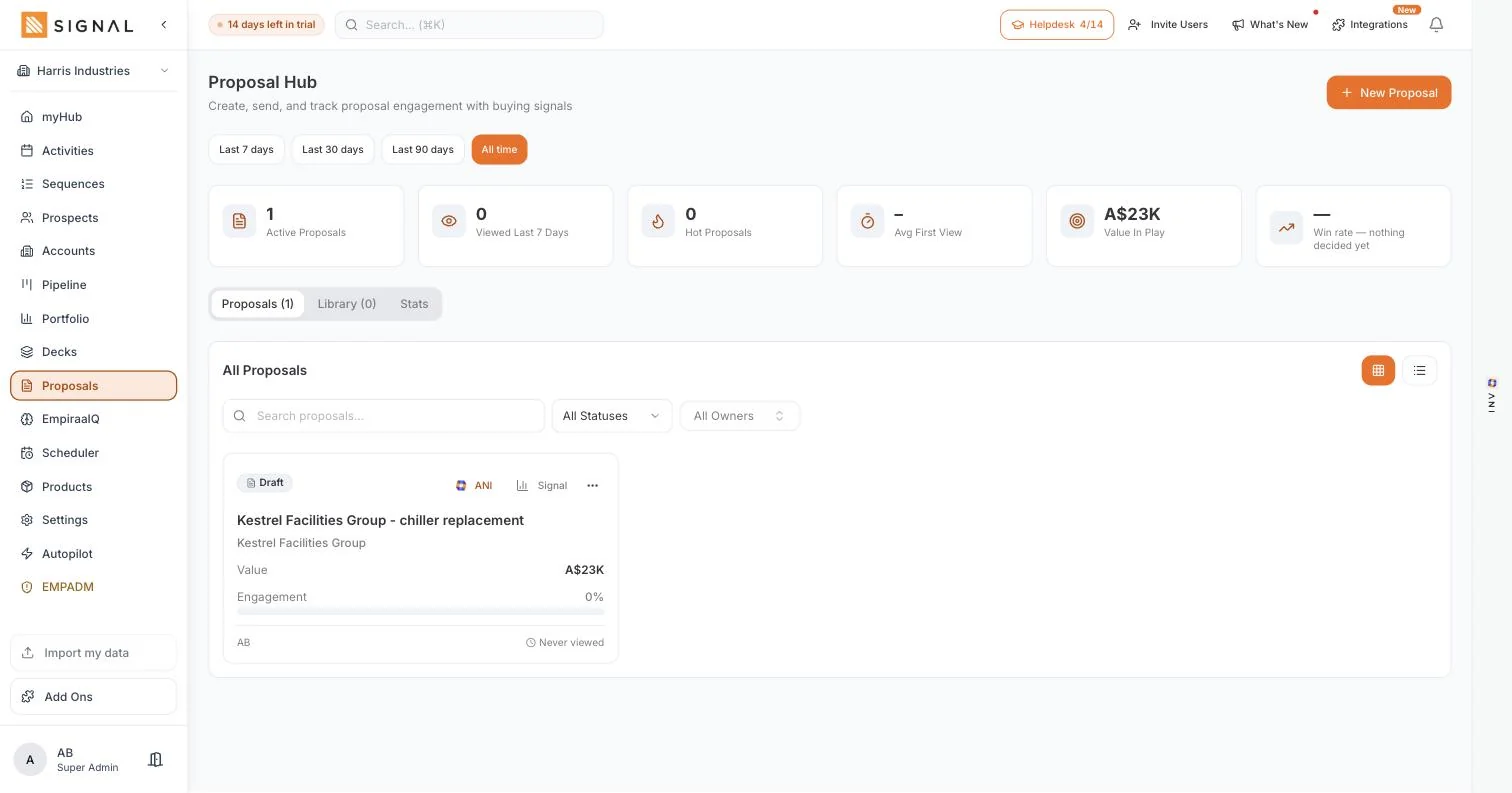
Scopes and fees from your own rates, built from the opportunity, sent as a tracked link. You can see it being read, which tells you whether to call today or give them another week.
- Rate cards, so a retainer and a project price consistently
- Engagement per proposal, and value in play across all of them
- Decks you can see being read, and who they were forwarded to
What you get
For a business that sells between everything else.
For office-based teams
One shared pipeline
Everything in play, visible to everyone, without a meeting to assemble it.
Learn moreUnlimited users
Every occasional seller in it, which is the only way this works at all.
Learn moreA four-minute daily list
Next steps and overdue work, rather than an afternoon of admin.
Learn moreProposals with fees
From your own rates and rate cards, tracked when they are opened.
Learn moreClient history that stays
The relationship belongs to the business, not to whoever ran the account.
Learn moreCoverage on the base
Which clients nobody has spoken to this quarter, as a number.
Learn moreGetting started
Half a day, and nobody changes how they work.
Four steps
- 10 minutes
Add everyone
Seats are free, so leaving people out only recreates the problem.
- 1 hour
Collect the conversations
Every live opportunity anyone is talking to, in one pipeline.
- 1 hour
Load your rates
The scopes and fee structures you quote most, at current prices.
- 15 minutes
Read the quarter
Weighted against the target. The first honest look is usually the useful one.
Go deeper
Find the page for your business.
By what you do
Questions
Office-based questions, answered.
Nobody here is a salesperson. Is this too much?
The parts that get used are the client record, a short daily list and the proposal. Nobody has to run a pipeline meeting for it to be worth having, and the coverage number alone usually pays for it.
How is this different from the professional services page?
That one is written for a practice, with partners, fee earners and referral sources. This one is for any office-based business where several people sell part of the time, which is a different problem: the pipeline is spread out rather than avoided. Professional services.
Can everyone be in it without the bill growing?
Yes. Every plan includes unlimited users and every limit is metered on the workspace, so putting the occasional sellers in costs nothing extra. See pricing.
Can I tell whether a proposal or deck was read?
Yes. Engagement per proposal, and views, open rate and average view time per deck. A second visit is the clearest buying signal you will get for free. More on decks.
Does it replace our project management tool?
No. This is the work before the work: the prospect, the conversation, the proposal and the forecast. Delivery, time recording and invoicing stay where they are.
How do we keep selling through a busy month?
Set the sequences up before it, not during it. They keep sending from your own inbox and stop the moment anybody replies, and the follow-up list is waiting when you resurface. More on sequences.

Question not answered here? Ask ANI and get a straight answer.
Put the whole quarter on one screen.
14 days free. No credit card. Unlimited users from the first minute.