

Products and pricing
What you sell, priced once, and used everywhere.
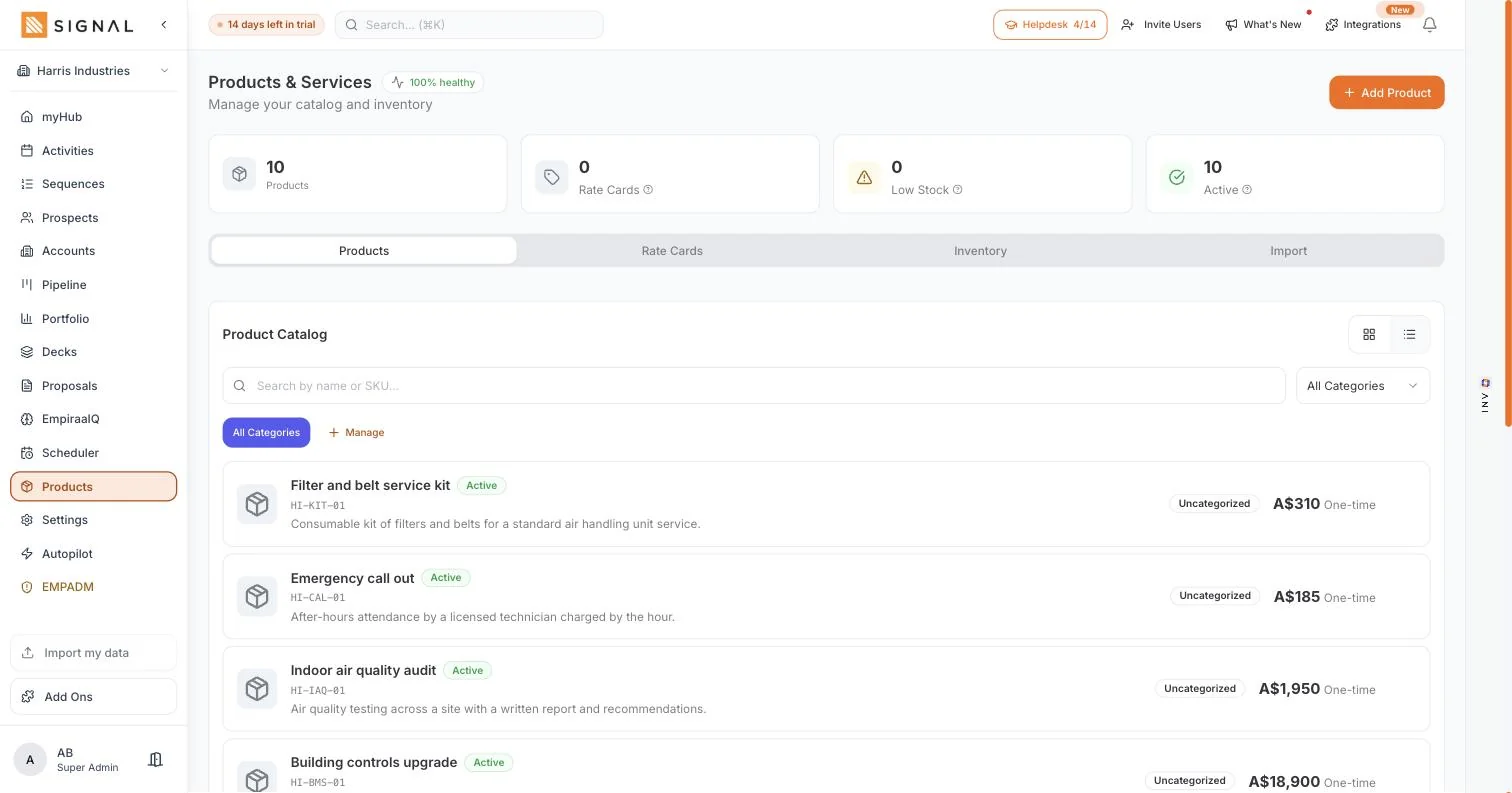
A catalogue of your services and equipment, with a code, a category and a price on each. Deals take their line items from it, proposals take their numbers from it, and the forecast stops depending on whoever typed the figure in.
14 days free. No credit card.
- 14 days free
- No credit card
- Unlimited users
The problem
The price list lives in three places.
A spreadsheet, last month’s quote, and the rate one person remembers.
What goes wrong
Last year’s rate goes out
Because the quote was built from an old document, and nobody checks a number that looks familiar.
Two people quote differently
Same service, same week, two prices. The customer finds out before you do, usually during a renewal.
The forecast is made of typing
When deal values are entered by hand there is no way to tell a rounded guess from a real quote, so the total is soft.
How it works
A catalogue, and everything reads from it.
The catalogue
Your services and your equipment, in one list
Each entry carries a code, a description, a category and a price, so a maintenance agreement and a plant replacement sit in the same catalogue without being confused for each other.
- A code per item, so the same thing is named the same way by everyone
- Categories, so recurring work and one-off work can be told apart
- Edit a price once and every new quote uses it
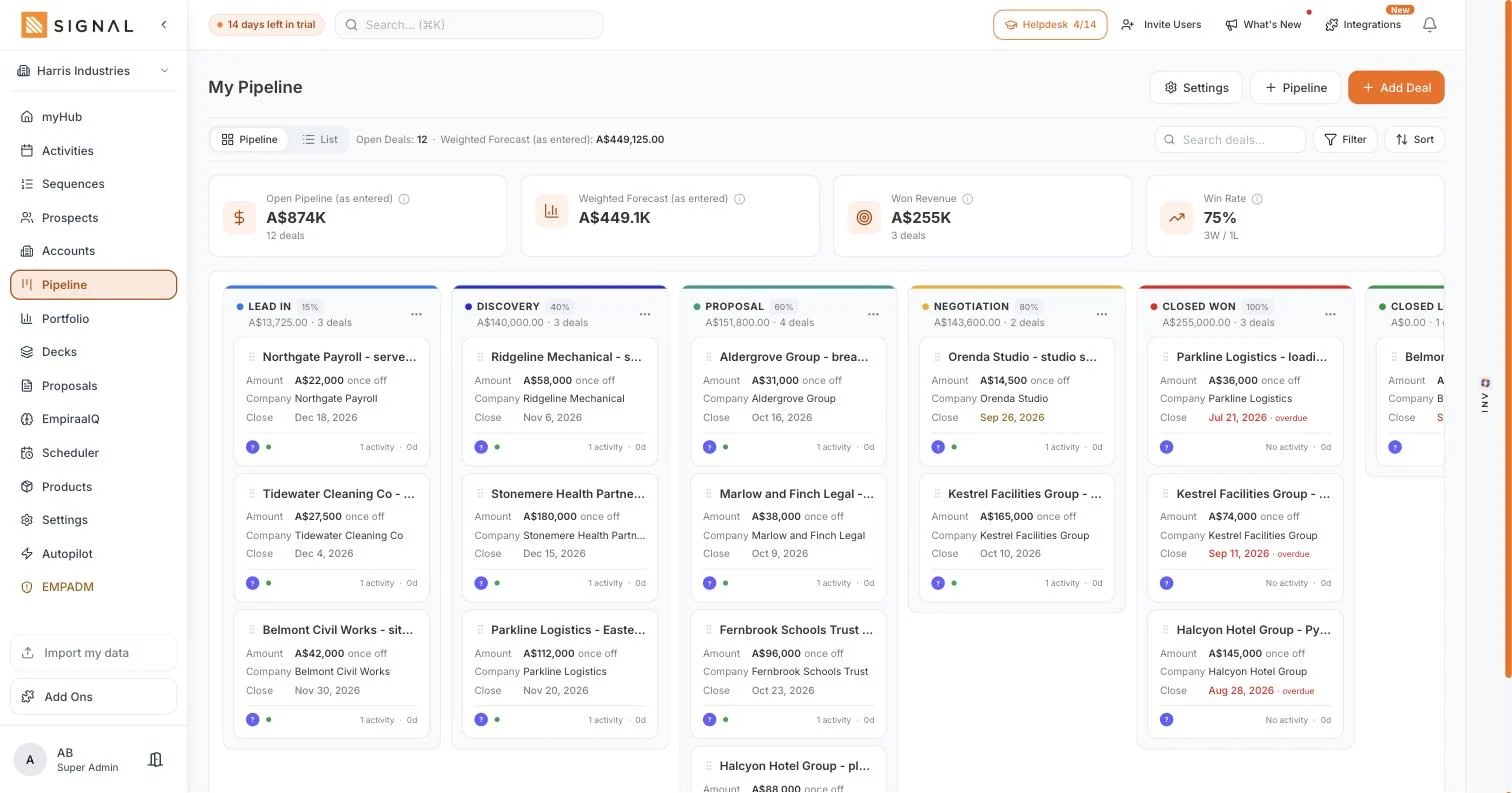
Line items on the deal
Build a deal out of what is actually being sold rather than a single lump figure. The value adds itself up, and anyone opening the deal later can see what it is made of.
- Quantity and price per line, totalled for you
- The deal value follows the lines, so it cannot drift from the quote
- What was sold is on the record when it comes time to renew it
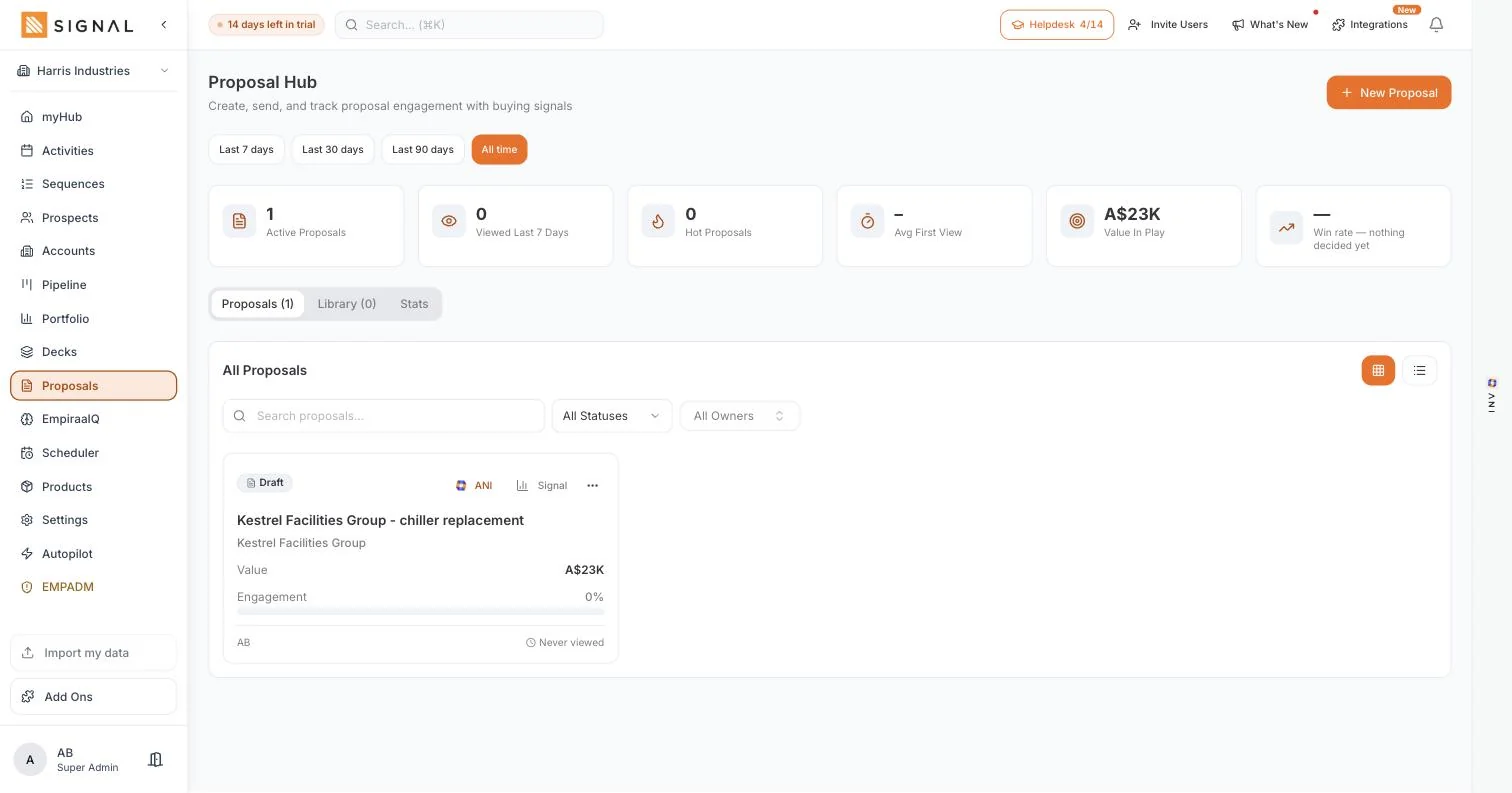
And the proposal is the same numbers
A proposal built from those lines carries the catalogue price, so the document your customer reads and the deal your forecast counts are the same figure. That is the whole reason this screen exists.
- Proposals priced from the catalogue rather than retyped
- Decks that quote the same numbers as the proposal
- A forecast built from quoted work rather than from estimates
What you get
Small screen, large consequences.
In the catalogue
Codes and categories
A SKU and a category per item, so reporting by what you sell is possible at all.
One price, one place
Change it once. Every quote after that is right, and none of the old ones change behind you.
Deal line items
Deals made of what is being sold rather than a number someone rounded.
Learn moreProposal pricing
Quotes priced from the catalogue, so the customer document and the deal agree.
Learn moreServices and equipment together
Recurring agreements and one-off supply in the same list, told apart by category.
Rate cards
For when different customers or contract types are quoted at different rates.
Inventory
Stock levels and reorder points, with low stock flagged on the home screen.
Import what you have
Bring the price list in from a spreadsheet rather than typing it in again.
Getting started
One hour, once.
Four steps
- 30 minutes
List the twenty you sell most
Not everything. The long tail can wait until somebody quotes it.
- 15 minutes
Give each one a code
Whatever your business already calls it. Consistency matters more than cleverness.
- 15 minutes
Set the current price
The one you would quote today, not the one on the old sheet.
- From then on
Build the next deal from lines
And the quote after it takes two minutes instead of an afternoon.
By role
What it changes, seat by seat.
Who feels it
A sales rep
You quote from the current price without asking anyone what it is now.
Learn moreA CEO or owner
A price rise reaches every quote the day you make it, rather than the month after.
Learn moreA sales manager
You can see what is actually being sold, not just how much.
Learn moreA trades or field business
Labour, materials and plant priced consistently whoever wins the job.
Learn moreQuestions
Catalogue questions, answered.
Can I import my price list?
Yes. Bring it in from a spreadsheet with the code, description, category and price, and ANI maps your columns. You do not retype a price list you already keep.
What happens to old quotes when I change a price?
Nothing. A proposal already sent keeps the price it was sent at. The new price applies to what you build from then on, which is the behaviour you want when rates go up mid-year.
Can I sell services and equipment from the same catalogue?
Yes. Categories keep recurring agreements and one-off supply apart while they sit in one list, so a maintenance contract and a plant replacement can both be quoted from it.
Do deal values come from the line items?
Yes. A deal built from line items totals itself, so the deal, the proposal and the forecast are the same number rather than three versions of it. More on forecasting.
Does this replace my accounting system?
No. This is what you quote. Invoicing, payments and the ledger stay in your accounting system, and the two describe different halves of the same job.
Is there a limit on how many products I can add?
Products sit inside your workspace record limit along with accounts, contacts and prospects, and that limit is on the workspace rather than per seat. See the plan limits.

Question not answered here? Ask ANI and get a straight answer.
Price it once and stop arguing about it.
14 days free. No credit card. Unlimited users from the first minute.