

For sales managers
Where the number stands, and which deals are lying to you.
You already know what everyone says is going to close. What you need is the weighted number, the deals nobody has touched in three weeks, and what share of the base is being worked at all. All three are on a screen rather than in a meeting.
14 days free. No credit card.
- 14 days free
- No credit card
- Unlimited users
The problem
You find out at the end of the month.
Which is exactly when it is too late to do anything about it.
Three blind spots
The pipeline is a list of hopes
Everything sits in Proposal, the total is a number nobody believes, and the real forecast lives in a spreadsheet you rebuild the night before the meeting.
Quiet deals look like live ones
Without the last activity on the card, a deal that died in July is indistinguishable from one that closes next week, so the pipeline review becomes a memory test.
Coverage is a feeling
Ask whether the base is being worked and you get an answer about the four accounts everybody is excited about, not the two hundred nobody has rung.
How it works
The one-to-one agenda, already written.
Your week
Two numbers, and the gap between them
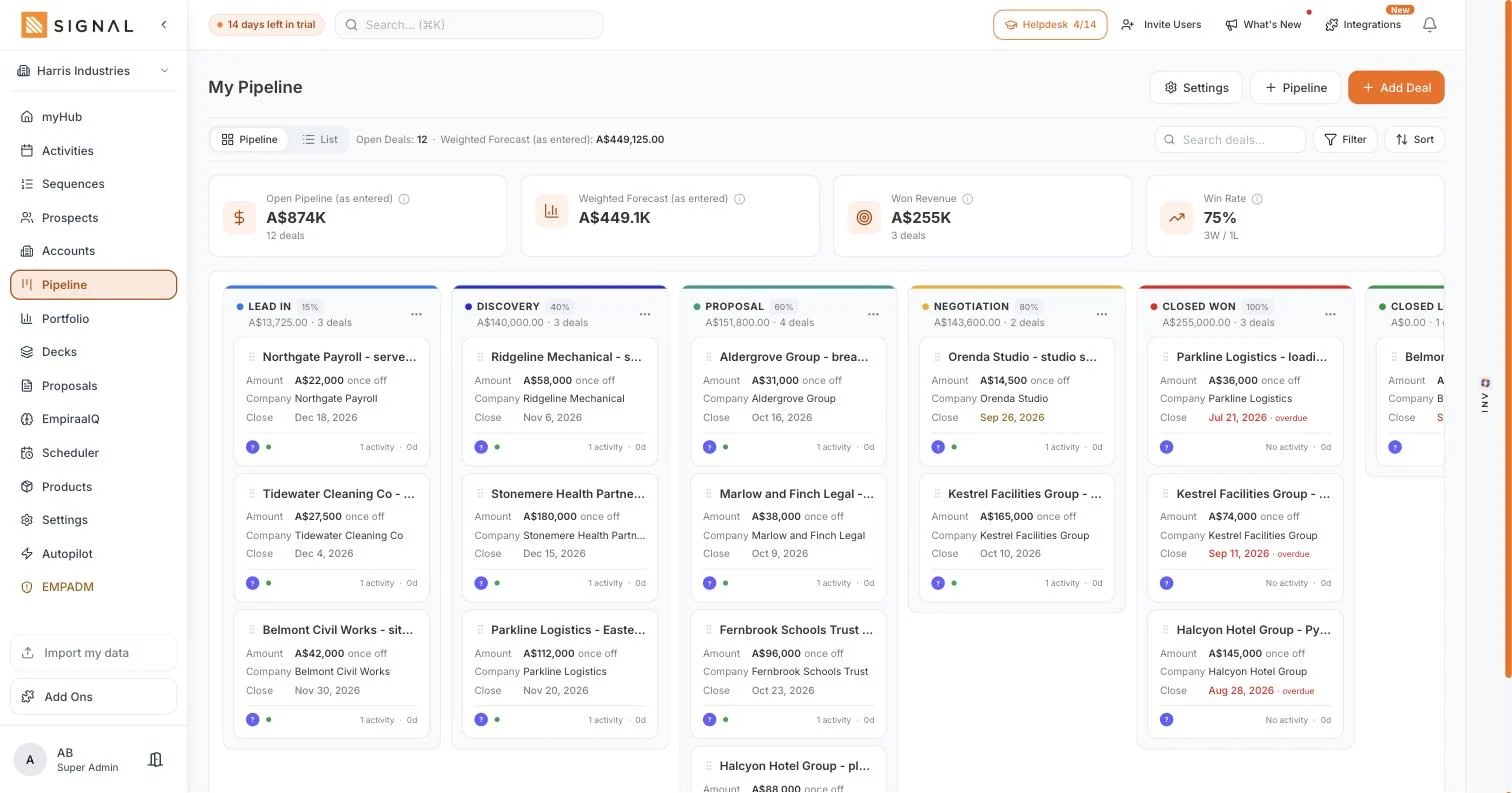
Open pipeline is what the team says. Weighted pipeline is what the stages say. The distance between those two figures is the most useful conversation you will have all week, and it is on the screen before you open anything.
- Weighted forecast from stage probabilities you set yourself
- Win rate and average deal size from real closes, with the count shown
- Value at risk from deals past their close date or gone quiet
The deals that have gone quiet, without asking anyone
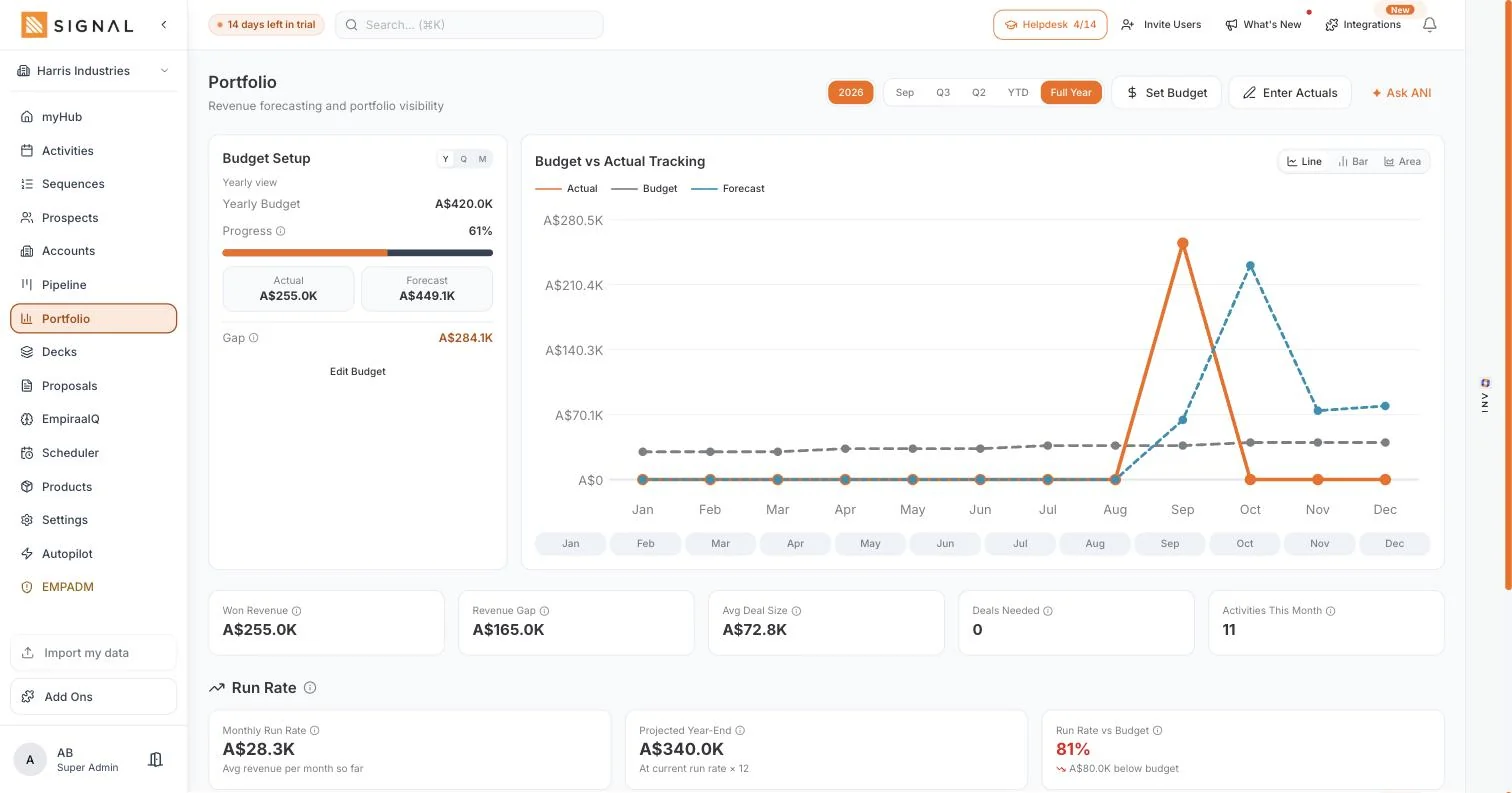
Every card carries its health and the days since anything happened on it. Filter for at risk or no next step and you have the list you would otherwise spend a one-to-one extracting.
- At risk, no next step and closing soon, as filters
- Overdue follow-up by team member, without a status report
- The last activity on the card, so nothing needs to be recalled from memory
And whether the base is actually being worked
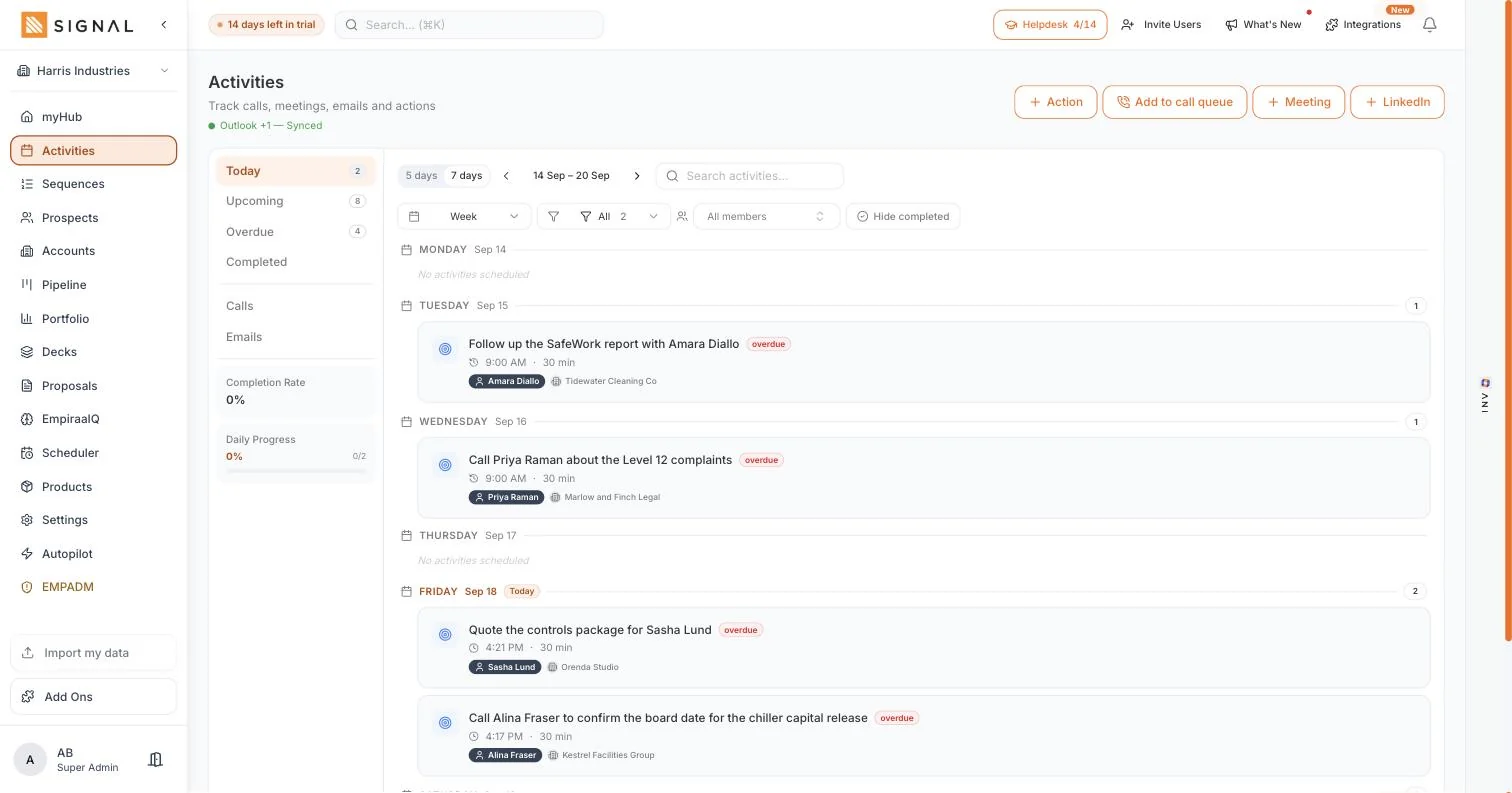
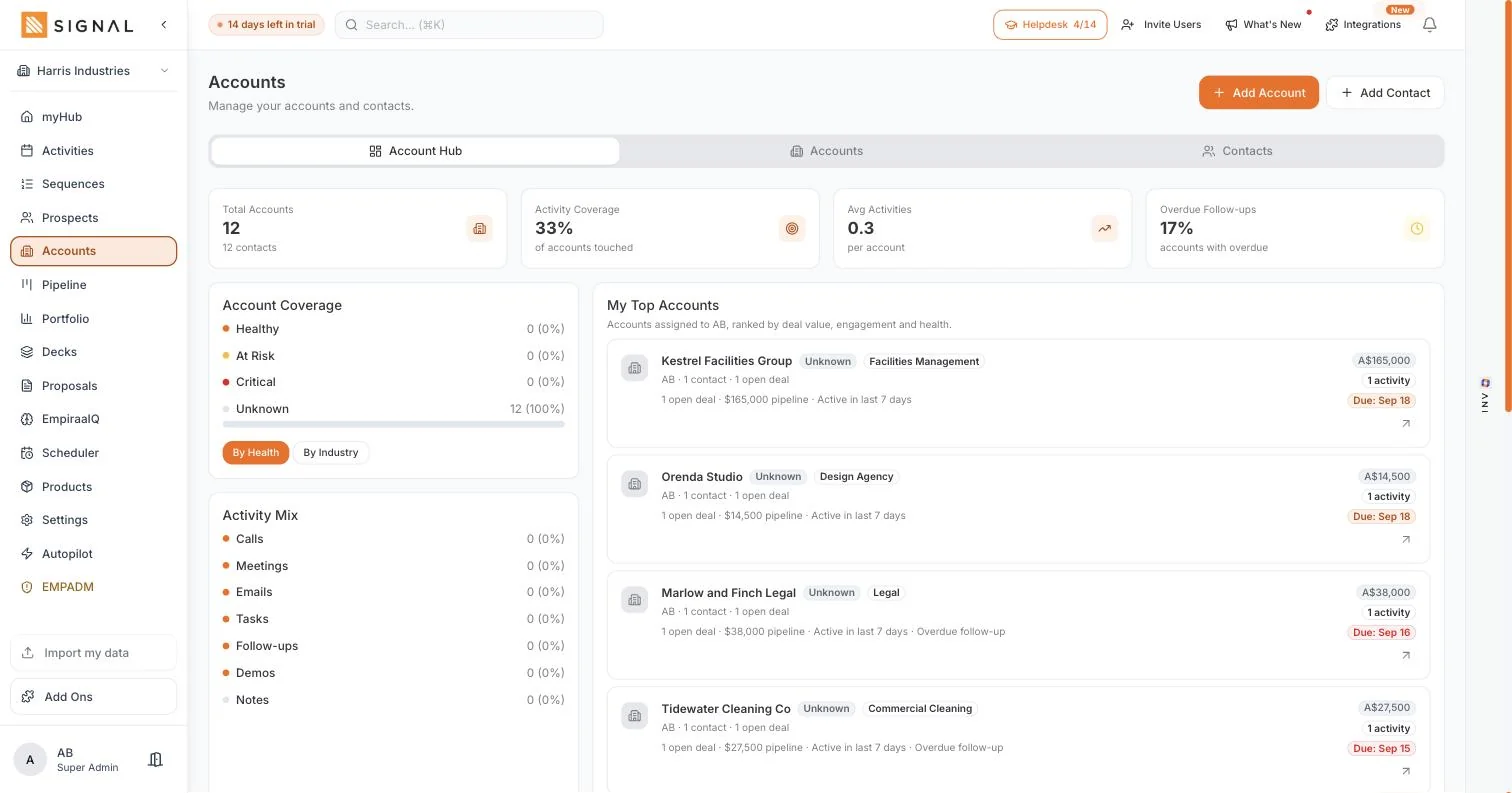
Activity coverage is the share of accounts anybody has touched in the period. Pipeline coverage is whether there is enough in play to make the number. Both are uncomfortable the first time and neither is a matter of opinion.
- Activity coverage across accounts, and by territory when you split it
- Pipeline coverage against the target, at your real win rate
- Territories with owners, so two people never call the same company
What you get
What you stop having to ask for.
For a manager
A weighted forecast
From the stage each deal is genuinely in, updating as the team works.
Learn moreDeal health
Good, at risk or critical, from close dates and silence rather than optimism.
Coverage, both kinds
Enough pipeline for the number, and enough activity across the base.
Learn moreTerritories with owners
Ownership by rule, so nothing is double called and nothing is uncovered.
Learn moreWhat outreach is working
Sends, replies and deliverability per sequence, so you can tell message from list.
Learn moreAnswers without a report
Ask Empiraa IQ in plain words and get the number from your own workspace.
Learn moreYour first fortnight
Run the first honest pipeline review.
Four steps
- Day one
Import the pipeline
Every open deal, with its value, stage and close date.
- Day one
Set honest probabilities
A generous Proposal stage makes every number after it wrong.
- Week one
Fix the close dates
The unpleasant hour. Do it with the team, not to them.
- Week two
Review on the filters
At risk, no next step, closing soon. The meeting writes itself.
Also for
The rest of the team.
Other seats
Sales reps
A day that starts with a list rather than a blank screen.
Learn moreCEOs and owners
A forecast that traces back to a deal, a stage and a date.
Learn moreFounders
Selling properly while you still do everything else.
Learn moreOnboarding a new rep
Selling in their first week, not their second month.
Learn moreQuestions
Manager questions, answered.
Will the team actually use it?
They use it if it gives them something. The prospect list, the follow-up that holds and the quote that takes two minutes are what earn the pipeline hygiene, which is a by-product rather than a chore. What a rep gets.
How is the weighted forecast worked out?
Each deal is counted at the probability of the stage it is in, and the results are added up. You set the probabilities, so you can explain the number in one sentence, which is what makes people use it.
Can I see activity by person?
Yes, by member and by territory, including overdue follow-up. It is meant for finding where help is needed rather than for counting keystrokes, and what each role can see is set by you.
What makes a deal at risk?
A close date that has passed, or a stretch with no activity on it. Both are facts, which is what makes the conversation about the deal rather than about the rep.
Do I have to pay for every person who needs to see this?
No. Every Signal plan includes unlimited users, and every limit is metered on the workspace, so putting the whole team on it costs nothing extra. See pricing.
Is Signal a CRM?
Empiraa Signal is a CRM and more. It holds the accounts, contacts, deals and pipeline a CRM holds, and it is also the B2B prospect database, the enrichment, the email sequences, the booking link and the proposal tool. Six subscriptions worth of software in one system, with unlimited users. Compare Signal and HubSpot.

Question not answered here? Ask ANI and get a straight answer.
Run the review off facts.
14 days free. No credit card. Unlimited users from the first minute.