

Targets and coverage
Enough pipeline to hit the number?
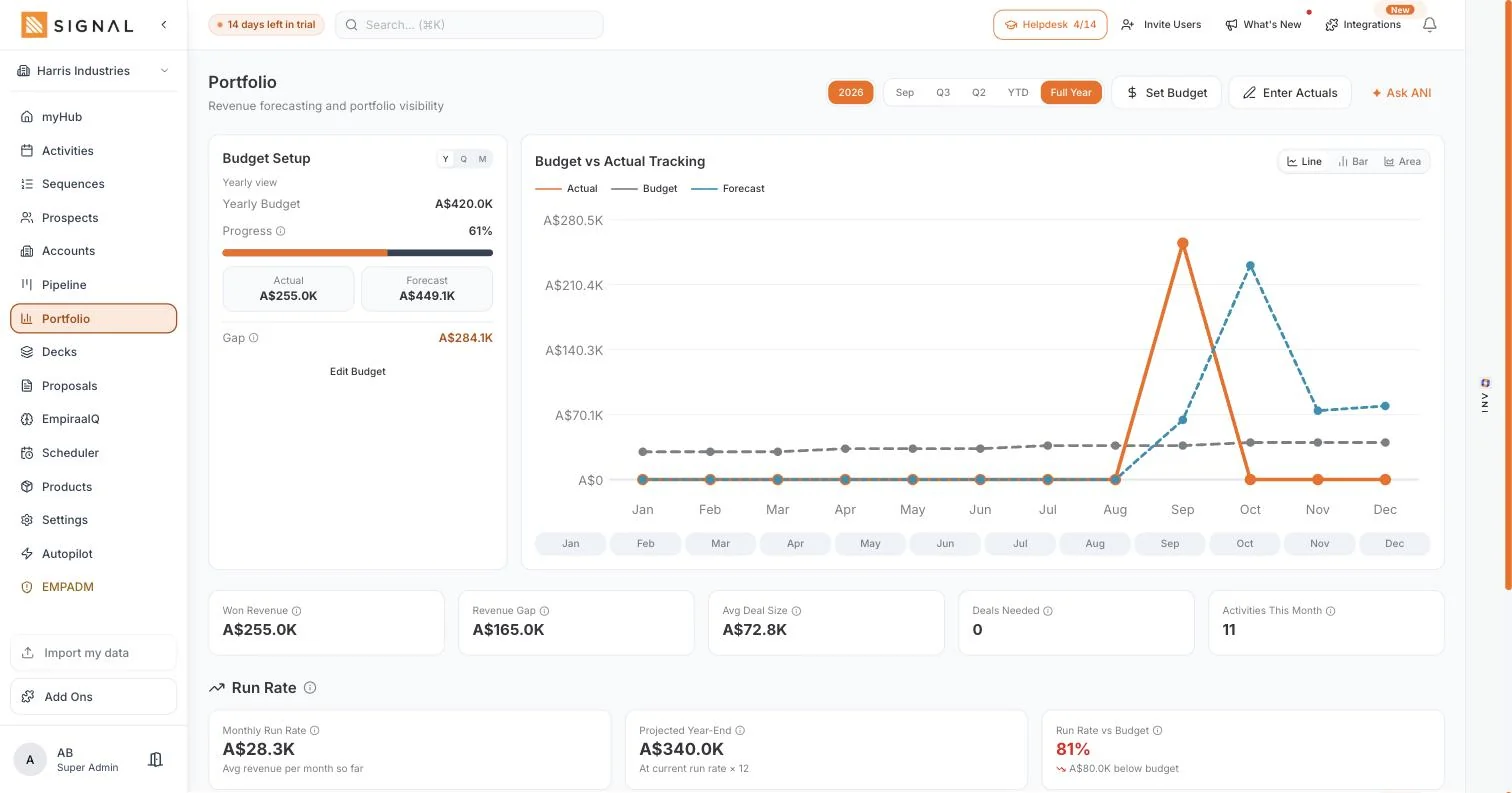
There are two coverage questions and most teams answer neither. Is there enough in the pipeline to make the target at your real win rate, and is anybody actually touching the accounts. Signal puts both on a screen, early enough to do something about them.
14 days free. No credit card.
- 14 days free
- No credit card
- Unlimited users
The problem
The target is announced, then hoped for.
Nobody works backwards from it to what it takes in deals and calls.
Why targets are missed quietly
The number has no plan under it
A target is set, everyone nods, and nothing translates it into how much pipeline that needs at the win rate you actually have.
Coverage is a feeling
Asking whether there is enough in the pipeline gets an answer based on the two deals people are excited about, not on the total.
Half the base is untouched
Activity clusters on the same accounts. Nobody notices the rest until a renewal goes to someone who called them.
How it works
Work back from the number.
Coverage
Pipeline coverage, against your own win rate
A target only means something next to the pipeline behind it and the rate at which your deals actually close. Signal has both, so the question of whether the quarter is reachable stops being a matter of opinion.
- The target you set, with the open pipeline beside it
- Win rate and average deal size from real closes, not a benchmark
- The gap shown as a figure, so it can be planned against
Coverage by stage, so you know where the hole is
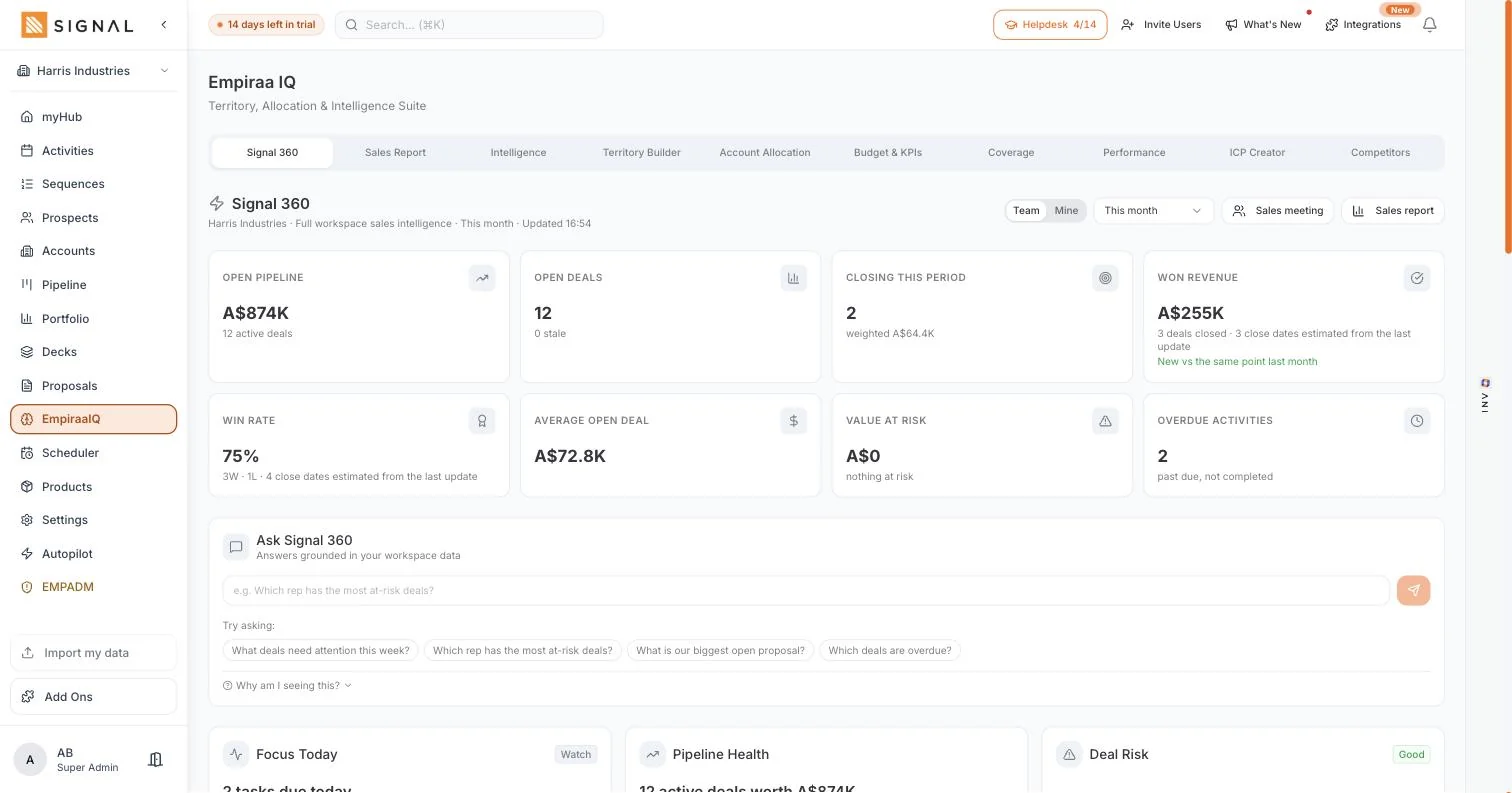
A pipeline with everything in Proposal and nothing in Discovery will make this month and miss the next two. Coverage by stage is how that shows up while there is still time to prospect.
- Pipeline coverage broken down by stage
- Enough early-stage work to make next quarter, or not
- Value at risk, from deals past their date or gone quiet
And activity coverage, which is the one nobody has
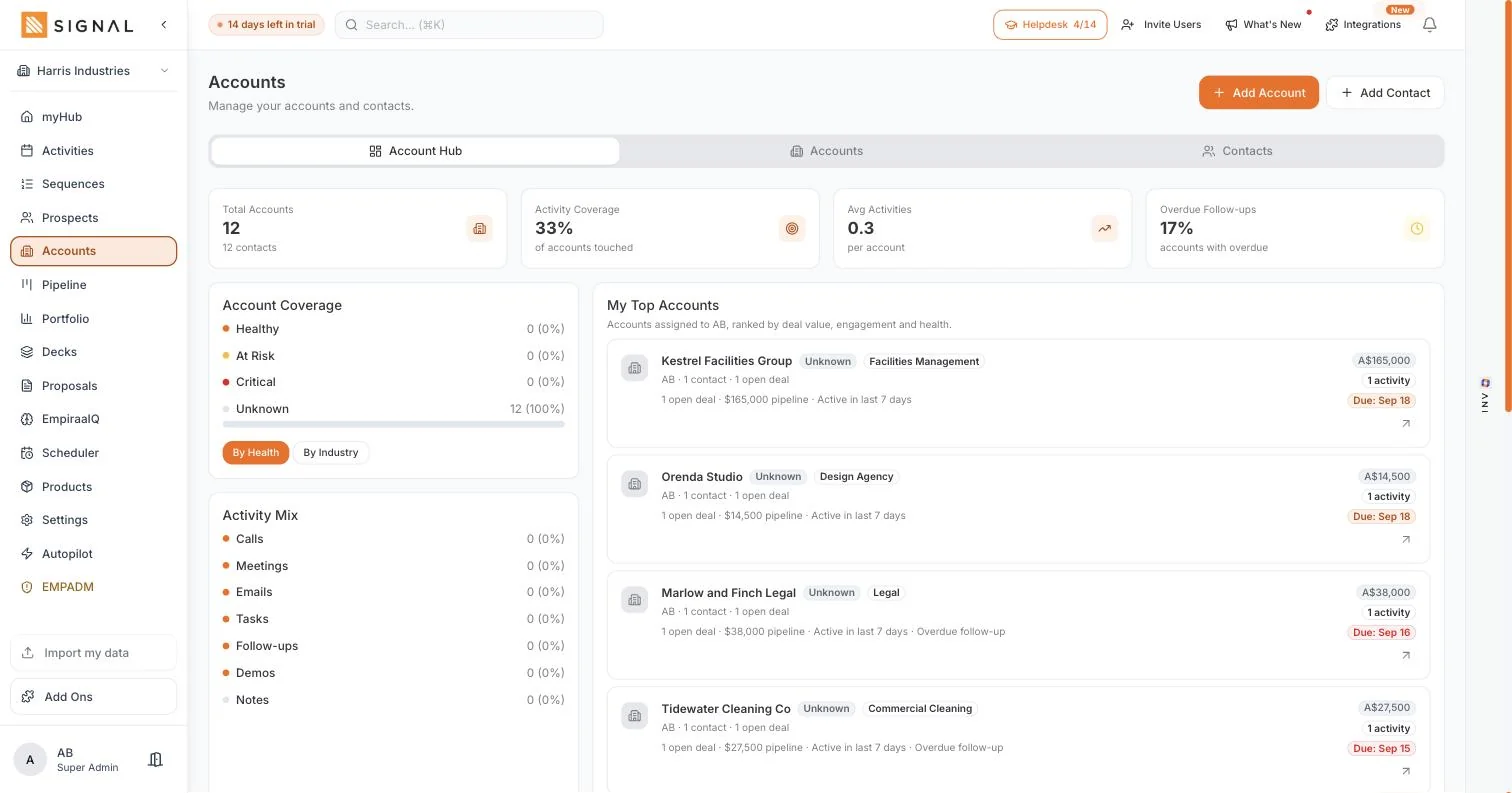
What share of your accounts has anyone actually touched in the period. It is a blunt number and it is usually uncomfortable the first time, which is exactly why it is worth having.
- Activity coverage across the account base
- Overdue follow-ups, so slippage is counted rather than felt
- By territory, when you want to know which patch is not being worked
What you get
The numbers behind the number.
In targets and coverage
A target with a plan under it
The number, the pipeline it needs and the gap, on one screen.
Your real win rate
Counted from actual closes, with the count shown, so you know when to trust it.
Pipeline coverage by stage
Where the hole is, this month and the two after it.
Activity coverage
What share of the base anyone has touched. Usually the most useful number here.
Learn moreOverdue follow-ups
Slippage counted, so it is a fact rather than a feeling.
Learn moreValue at risk
Open value on deals past their close date or gone quiet.
Getting started
From a number to a plan.
Four steps
- 2 minutes
Set the target
The revenue number the business is actually working to this year.
- 5 minutes
Look at the coverage
Pipeline against target, at your real win rate. This is the honest part.
- 10 minutes
Find the missing stage
Usually early stage. That is a prospecting decision, not a closing one.
- This week
Check activity coverage
Then go and work the share of the base that nobody has called.
By role
What it changes, seat by seat.
Who feels it
A sales manager
You can say what the team has to do this month, with the arithmetic to back it.
Learn moreA CEO or owner
A shortfall in month three instead of month ten, which is the difference between fixable and not.
Learn moreA founder
You find out how much prospecting the target actually needs, before the quarter decides for you.
Learn moreA team on a number
The target stops being an announcement and becomes a weekly amount of work.
Learn moreQuestions
Coverage questions, answered.
What is pipeline coverage?
How much open pipeline sits behind the target, read against the rate your deals actually close at. It answers whether the number is reachable with what you already have in play.
What is activity coverage, and how is it different?
The share of your accounts that anyone has logged an activity against in the period. Pipeline coverage says whether the deals are there. Activity coverage says whether the base is being worked at all, and a team can look fine on one and be failing on the other. More on accounts and contacts.
Where does the win rate come from?
From your own closed deals, with the count shown beside it so you can tell a real rate from a small sample. Nothing is borrowed from an industry benchmark.
Can I see coverage by territory?
Yes. Once ownership is set by territory, coverage can be read patch by patch, which is how an unworked area gets found before a renewal is lost in it. More on territories.
Do I need a sales operations person to set this up?
No. Set the target, import the pipeline and the numbers are there. Nothing on this screen assumes a reporting function, which is the point for a growing team.
Is this an add-on?
No. Targets and coverage are part of Empiraa IQ, which is part of Signal, and every plan includes unlimited users. See pricing.

Question not answered here? Ask ANI and get a straight answer.
Find the gap while you can still close it.
14 days free. No credit card. Unlimited users from the first minute.