

Pipeline
Two numbers. One of them is the truth.
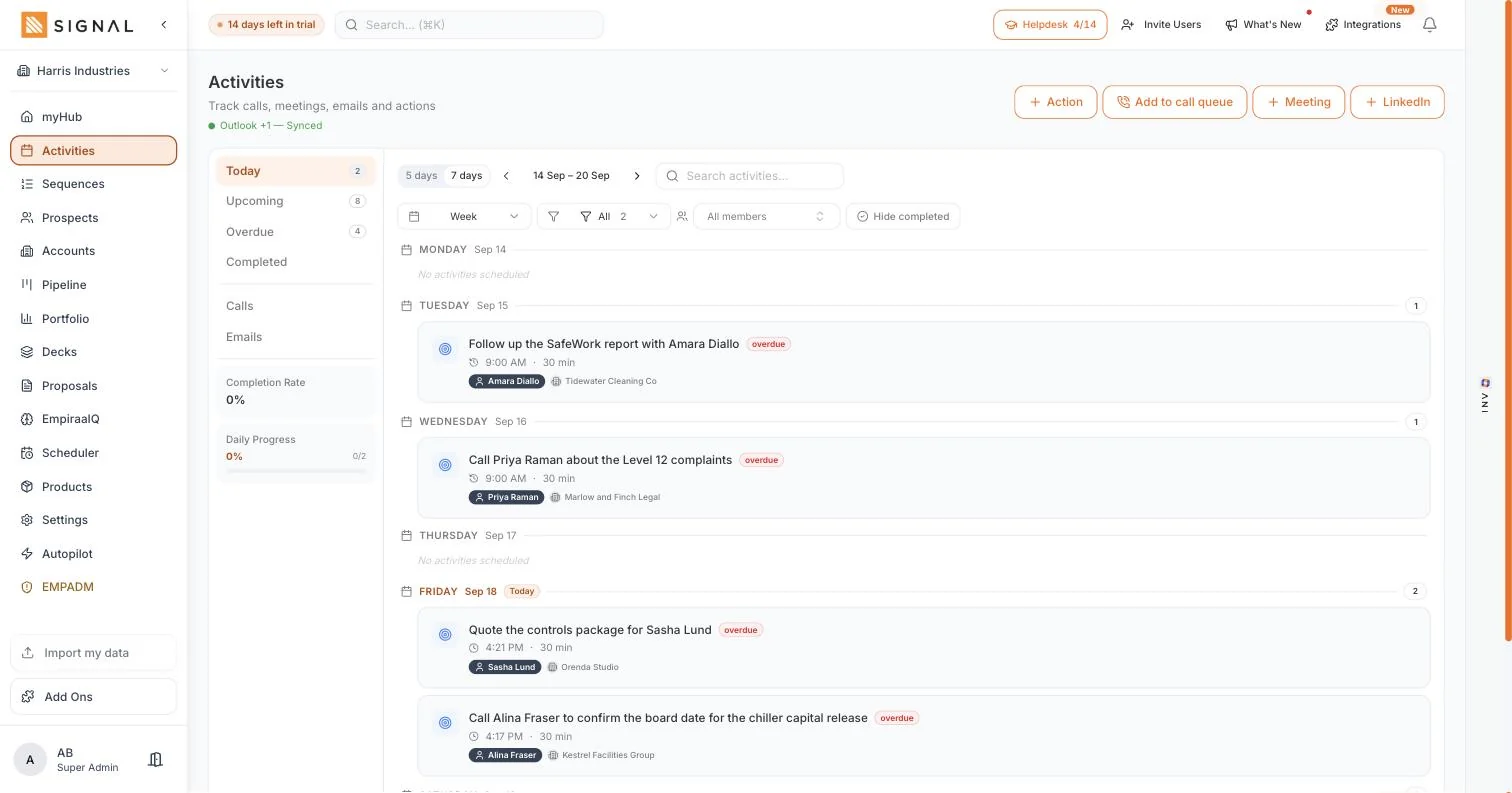
Your open pipeline is the number everyone quotes. Your weighted pipeline is the one to plan against. Signal shows both on the same screen, works the second one out from the stage each deal is actually in, and tells you how long since anybody touched it.
14 days free. No credit card.
- 14 days free
- No credit card
- Unlimited users
The problem
Most pipelines are a list of hopes.
Not because anyone is lying. Because nothing in the system makes the optimism cost anything.
Three ways it goes wrong
Everything is in Proposal
The stage becomes a filing cabinet. A deal that went quiet in July is still sitting in the column that suggests it closes this month.
The forecast is a total
Adding up every open deal gives you a number nobody believes, including the person who produced it. So the real forecast lives in a spreadsheet instead.
Nobody knows what happened last
Without the last activity on the card you cannot tell an active deal from a dead one, so the pipeline meeting becomes a memory test.
How it works
A stage is a probability, not a folder.
Which is what makes the second number worth having.
The board
Drag a deal and the forecast moves
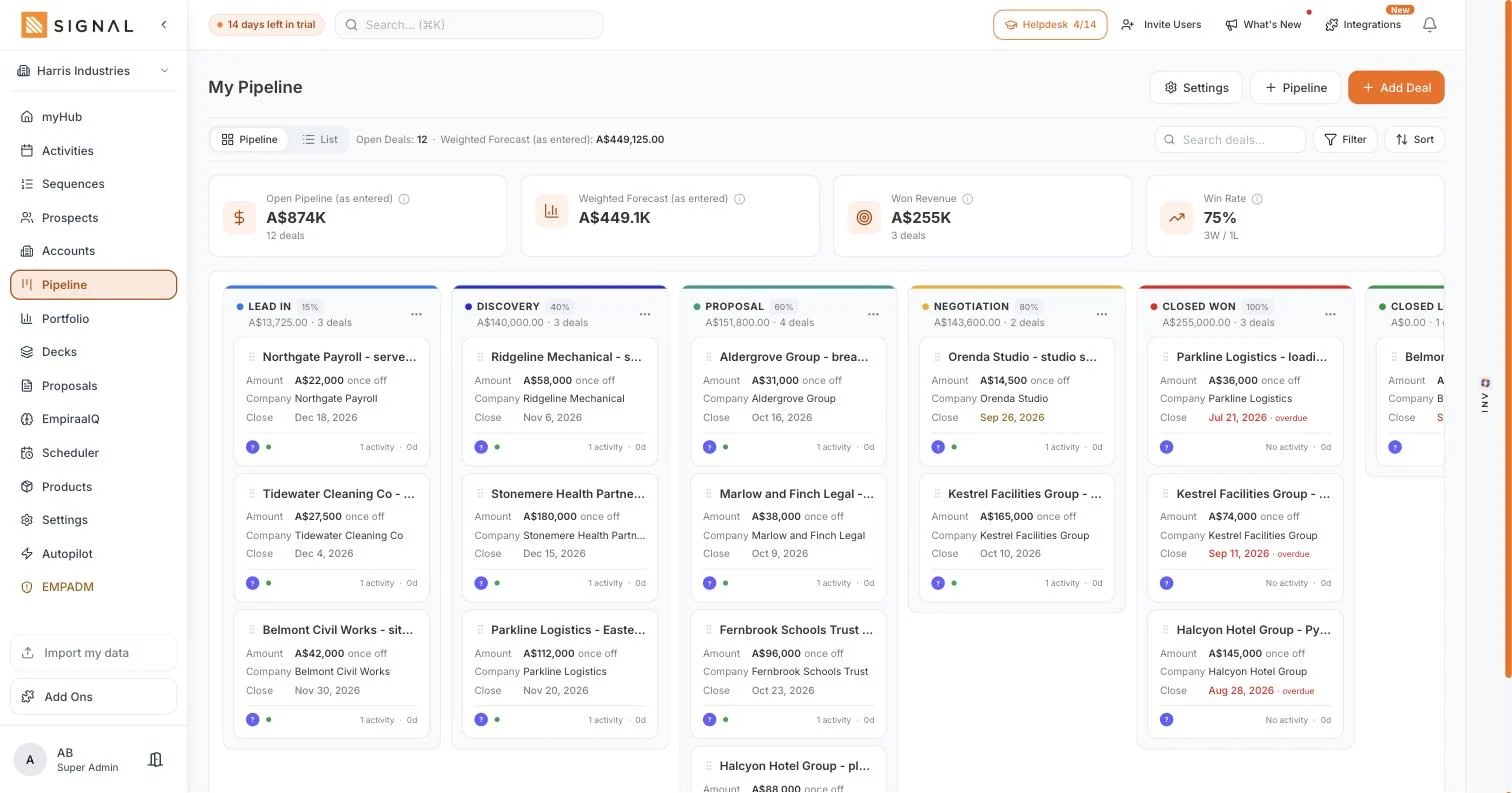
Every stage carries a probability, so moving a card changes what the pipeline is worth. That one rule is what stops a stage from being somewhere to park things, and it is why the weighted number means something.
- Lead In, Discovery, Proposal, Negotiation, Closed Won and Closed Lost out of the box
- Rename the stages and set your own probabilities
- Several pipelines if you sell more than one thing in more than one way
Health and last touch on the card
Amount, company, close date, days since the last activity and a health mark, without opening anything. The deals that need you today are the ones that look wrong from across the room.
- At risk when the close date has passed or nothing has happened
- Filters for my deals, at risk, no next step and closing soon
- A list view when you want to sort by value, date or health instead
And the forecast reads itself
Open pipeline, weighted forecast, won revenue and win rate sit above the board and update as you work. There is no report to run and no spreadsheet to rebuild the night before a board meeting.
- Weighted forecast, from the stage each deal is genuinely in
- Win rate counted from real closes, with the count shown so you know when to trust it
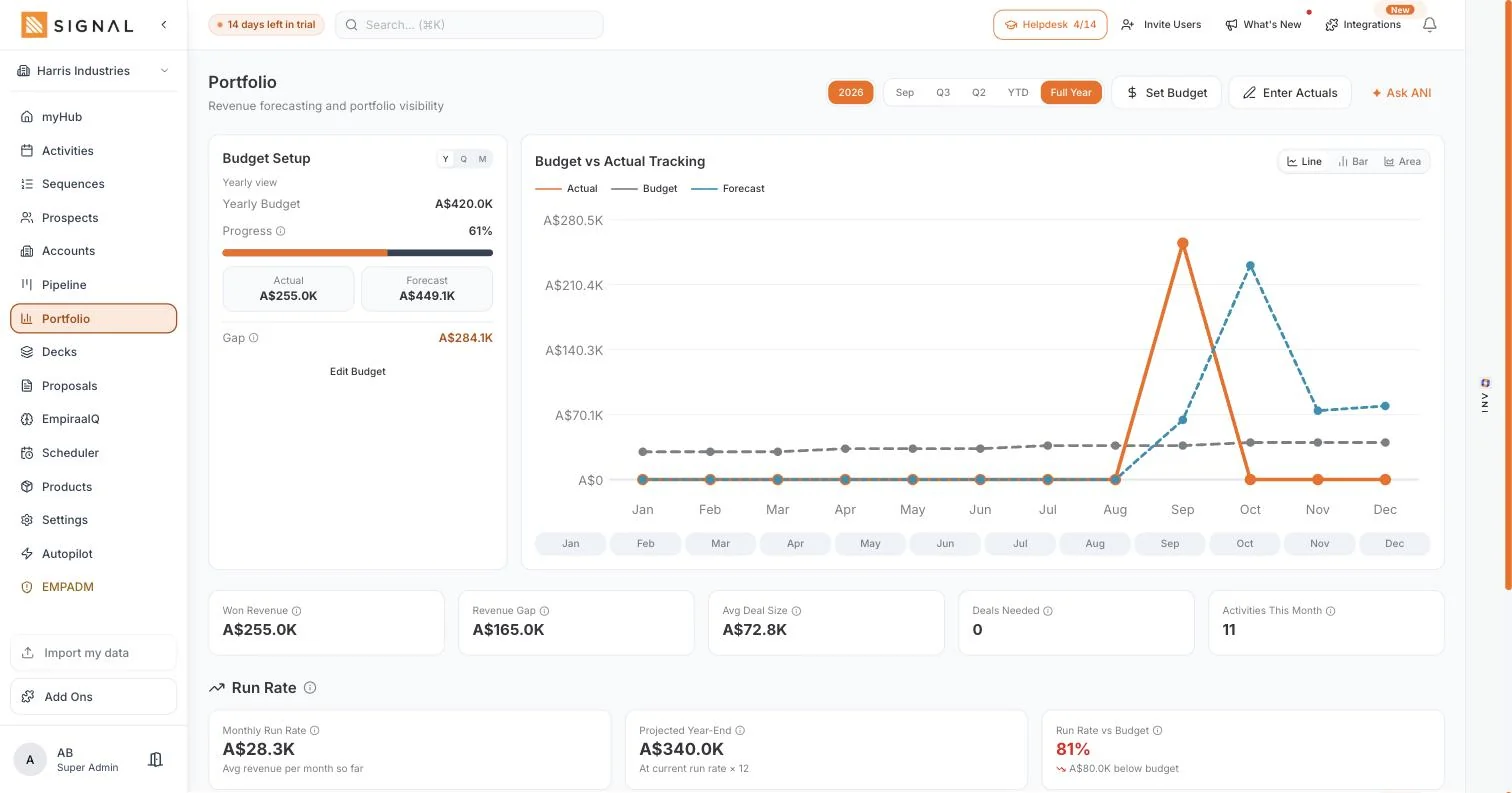
- The same numbers feed Portfolio, where they land against your budget
What you get
The parts that keep a pipeline honest.
In the pipeline
Board or list
Drag cards when you are working, sort a table when you are reviewing. Same deals, same numbers.
Your own stages
Rename them, reorder them and set the probability on each, so the forecast matches how you actually sell.
Deal health
Good, at risk or critical, from close date and activity rather than from how anyone feels about it.
Everything on the deal
Contacts, activities, notes, proposals, decks and ANI insight, on the one record.
Products and pricing
Line items from your catalogue, so the deal value and the proposal cannot disagree.
Learn morePipelines, plural
5 pipelines on the cheapest plan, and more above it, for different products or different teams.
Getting started
Bring the pipeline you already have.
Four steps
- 10 minutes
Import the deals
From HubSpot, Pipedrive, Salesforce or a spreadsheet. ANI maps your columns.
- 5 minutes
Set your stages
Use the six that ship, or rename them to yours and set the probabilities.
- 1 hour
Fix the close dates
The unpleasant hour that makes every number after it true.
- From then on
Work the board
Move cards as things happen. The forecast keeps itself.
By role
What it changes, seat by seat.
Who feels it
A sales rep
Pipeline hygiene stops being a chore, because moving a card is the whole of it.
Learn moreA sales manager
The gap between full value and weighted value is your one-to-one agenda, already written.
Learn moreA founder
Somewhere around twelve deals your memory stops working. This is the thing that takes over.
Learn moreA CEO or owner
A forecast you can defend, because every number traces back to a deal, a stage and a date.
Learn moreQuestions
Pipeline questions, answered.
Can I move my pipeline over from HubSpot or Pipedrive?
Yes. Deals import with their name, value, stage, account and close date, and ANI maps your columns automatically. Accounts, contacts and prospects import the same way, so you can bring the whole thing rather than starting empty. Switching from HubSpot.
Can I change the stages?
Yes. Rename them, reorder them, add or remove them, and set the probability on each one. The weighted forecast follows whatever you set, so it should reflect how your deals really behave rather than a default.
How is the weighted forecast worked out?
Each deal is counted at the probability of the stage it is in, and the results are added up. It is deliberately simple, because a forecast you can explain in one sentence is a forecast people will actually use.
What makes a deal at risk?
A close date that has passed, or a stretch with no activity on it. Both are facts rather than opinions, which is the point. You can see every at-risk deal with one filter.
Do I pay more for extra users on the pipeline?
No. Every plan includes unlimited users. Hiring another salesperson does not change what you pay, and there is no reason to share a login. See pricing.
Is Signal a CRM?
Empiraa Signal is a CRM and more. It holds the accounts, contacts, deals and pipeline a CRM holds, and it is also the B2B prospect database, the enrichment, the email sequences, the booking link and the proposal tool. Six subscriptions worth of software in one system, with unlimited users. Compare Signal and HubSpot.

Question not answered here? Ask ANI and get a straight answer.
Get a forecast you would put your name to.
14 days free. No credit card. Unlimited users from the first minute.