

Agencies
New business beside the client work.
In an agency the people who sell are the people delivering, and they sell in whatever gaps the month leaves. Signal keeps the pipeline moving through those gaps: outreach that runs on its own, decks you can see being read, and retainers and projects priced from the same rate card.
14 days free. No credit card.
- 14 days free
- No credit card
- Unlimited users
The problem
Everyone sells, so nobody owns it.
Which is fine until three people are half-running the same pitch.
Where it breaks
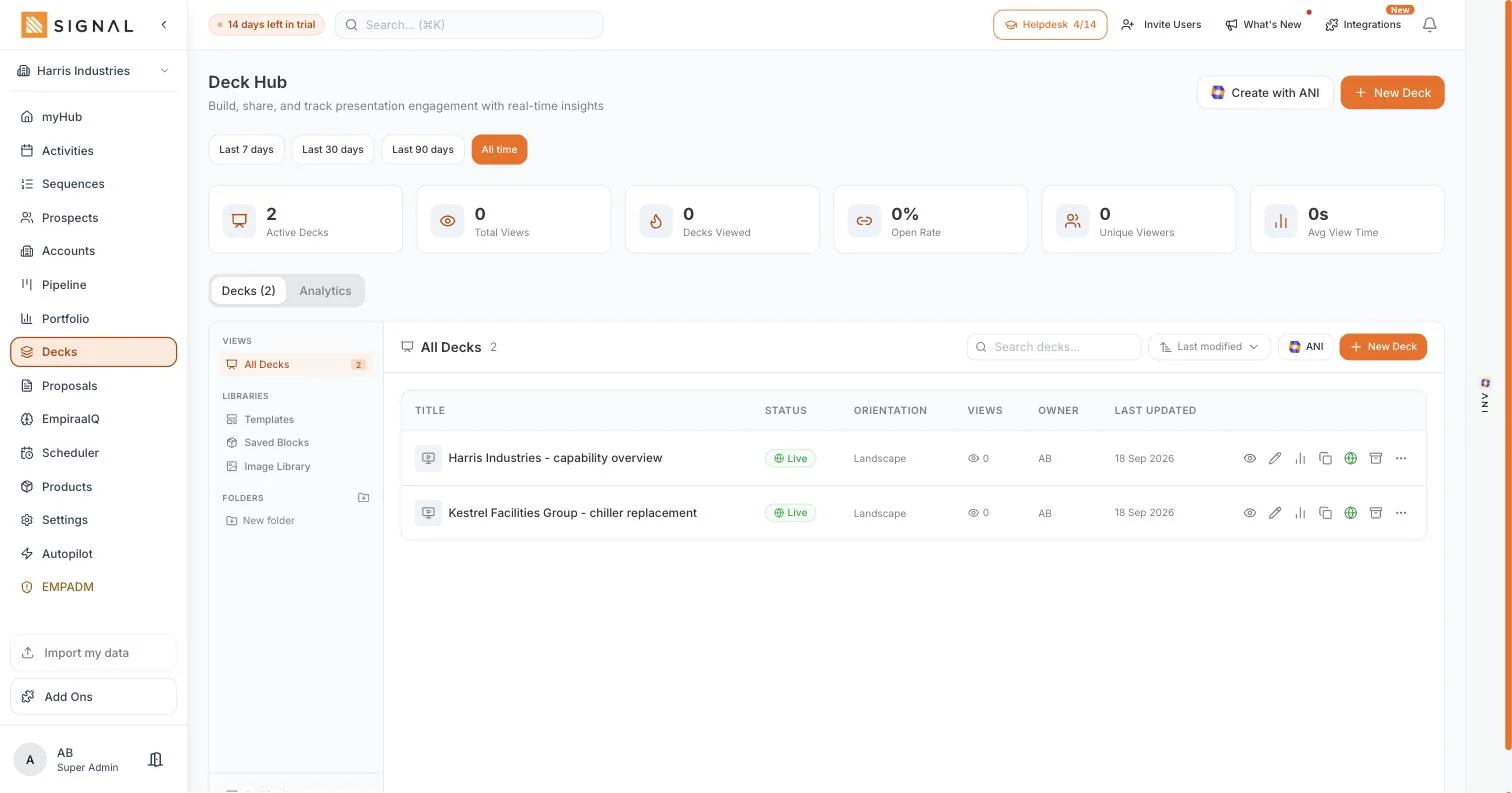
The pipeline is four inboxes
The strategy director has one conversation, the principal has another, and nobody can answer what is actually in play this quarter without a meeting to assemble it.
Pitches have three decision-makers
Marketing lead, procurement and someone senior who never takes the meeting. If your record holds one contact, you are pitching to a third of the room.
Retainers and projects get muddled
They are different revenue with different risk, and when they sit in one pile the forecast tells you very little about next year.
How it works
One pipeline the whole studio can see.
The agency
Everyone in it, because seats are free
Every plan includes unlimited users, so the account leads, the strategy director and the principal all work in the same pipeline. Nobody is left out to keep a bill down, which is how conversations end up in four inboxes.
- Unlimited users on every plan, metered on the workspace
- One record per client, whoever had the conversation
- Owners on accounts, so two people never pitch the same prospect
Credentials and pitches you can see landing
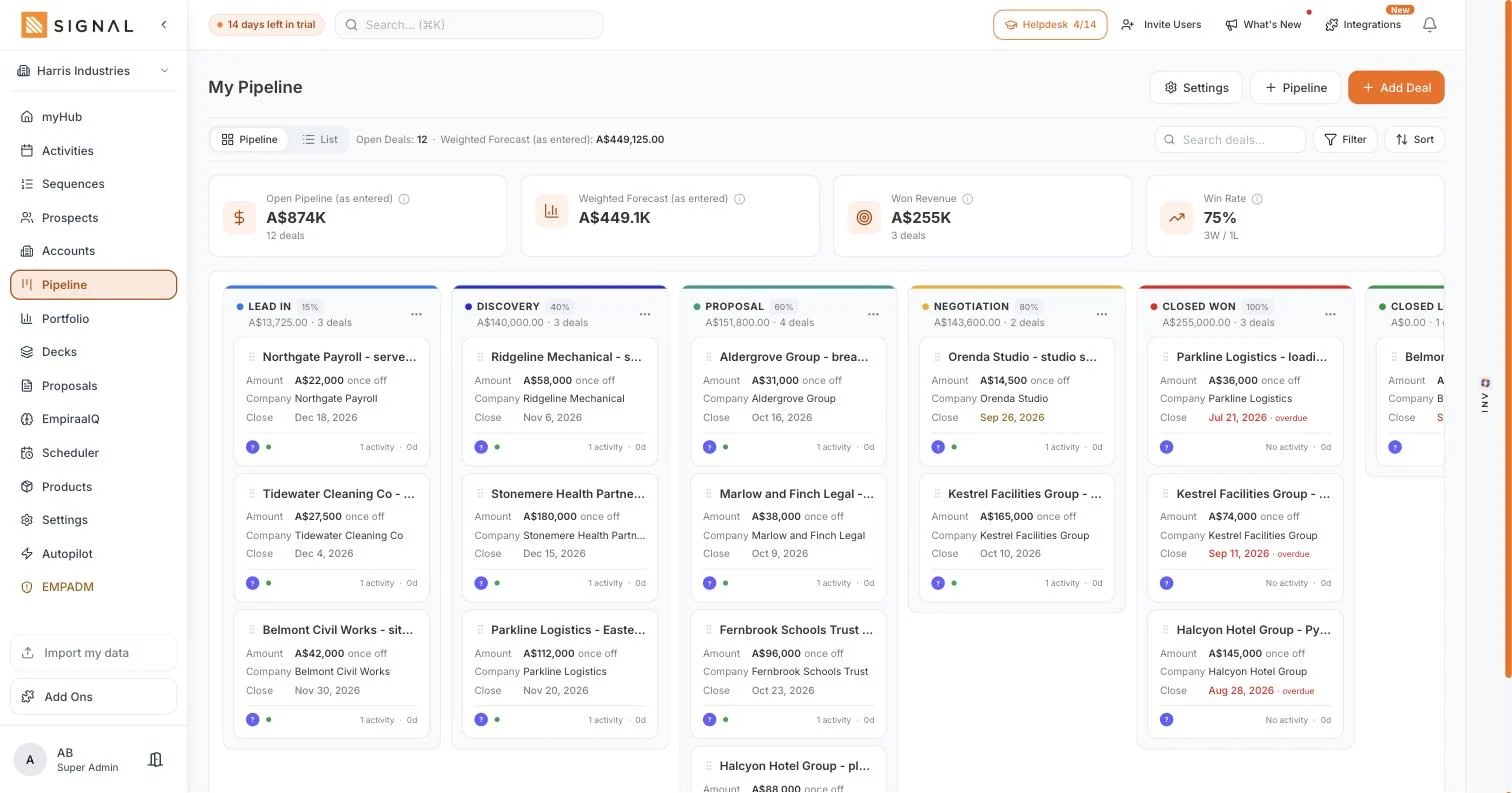
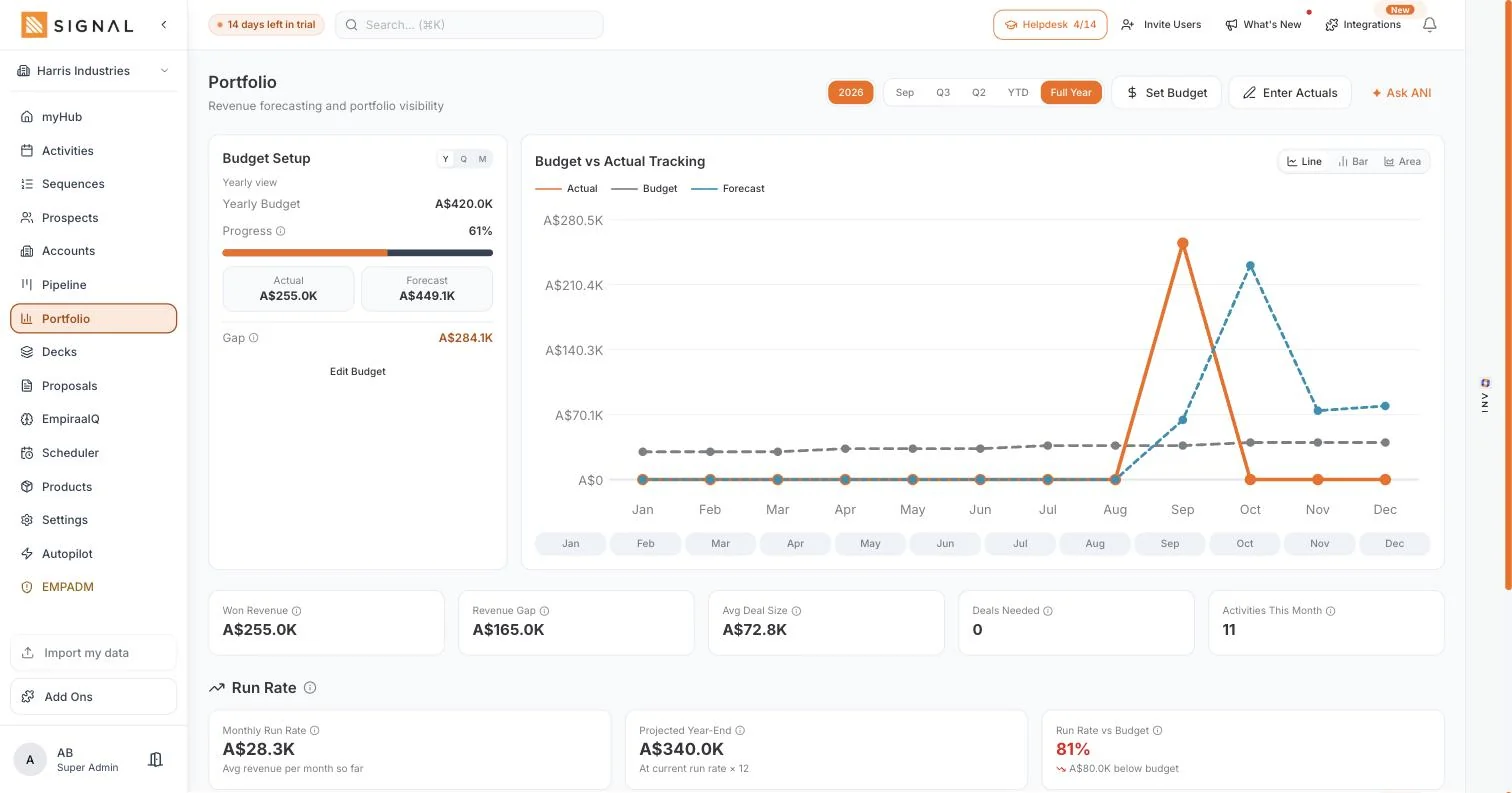
Build the deck once, keep it current, and send it as a link. Views, open rate and time on it tell you whether the story worked, and a forward inside the client usually points at the person who actually signs.
- Sent as a link, so an update reaches whoever already has it
- Views and average view time per deck
- Every contact in the pitch on the account, with their role
Retainers and projects, priced and forecast apart
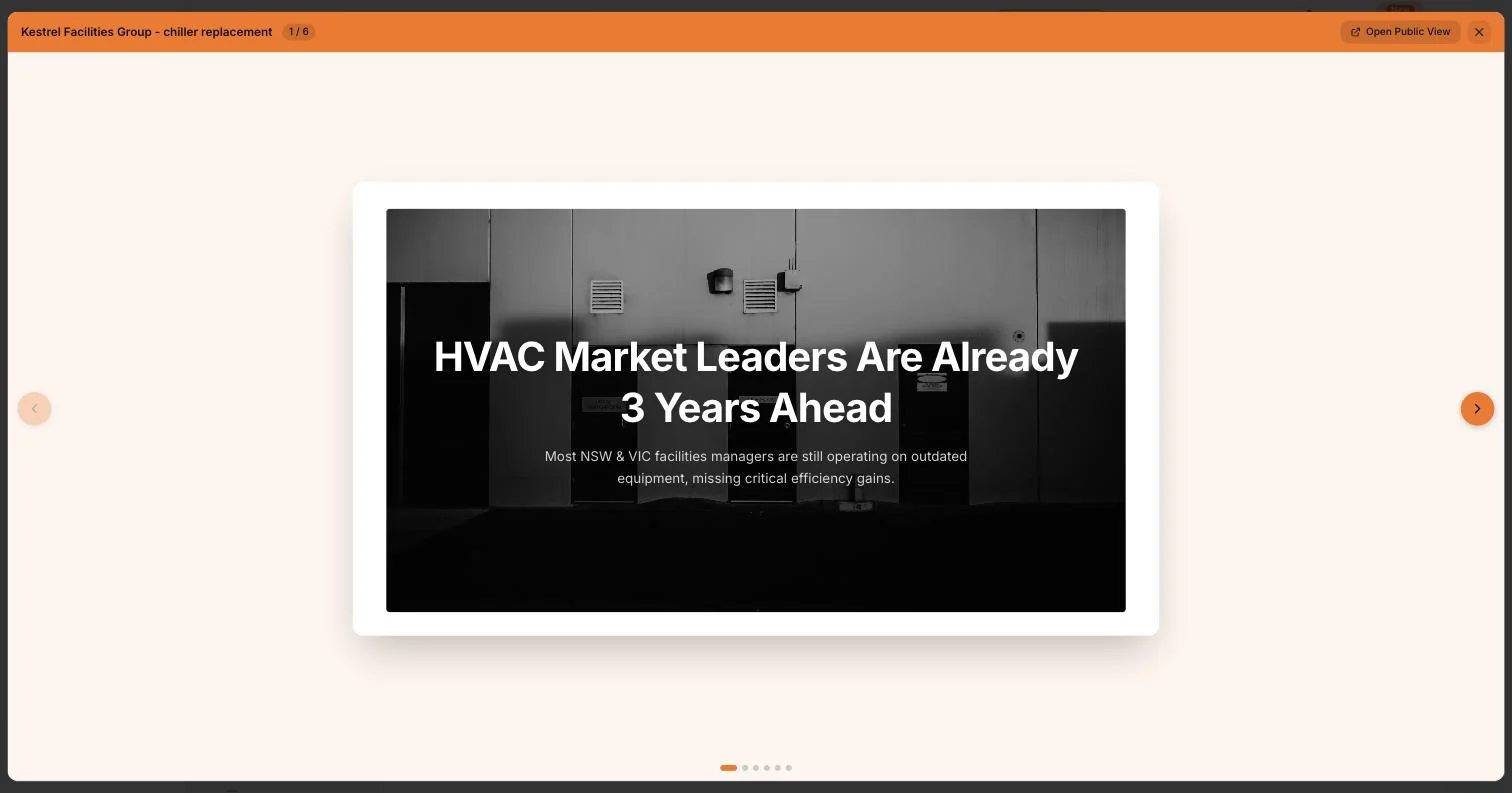
Both come from one rate card so a quote is never out of date, and separate pipelines keep recurring revenue from being confused with one-off work. The forecast adds them up and the budget sits next to it.
- Day rates, retainers and project scopes in one catalogue
- Separate pipelines, because they do not close the same way
- Budget, forecast and gap on one screen for the year
What you get
For a studio that has to sell between projects.
For agencies
One shared pipeline
Everything in play, visible to everyone, without a meeting to assemble it.
Learn moreTrackable decks
Credentials and pitches sent as links, with views and time on them.
Learn moreOutreach that keeps going
Through the busy month, stopping the second anyone replies.
Learn moreOne rate card
Retainers, projects and day rates, priced once and used in every proposal.
Learn moreClient history that stays
The relationship belongs to the agency, not to whoever ran the account.
Learn moreUnlimited users
Every account lead in it, at no extra cost, which is the only way this works.
Learn moreGetting started
Put the whole studio in it.
Four steps
- 10 minutes
Add everyone
Seats are free, so leaving people out only recreates the problem.
- 1 hour
Collect the conversations
Every live prospect anyone is talking to, in one pipeline.
- 1 hour
Load the rate card
Retainers, project scopes and day rates at current prices.
- 15 minutes
Split the pipelines
Retainer and project. They behave differently and should forecast differently.
Also for
Where else this lands.
Other pages
Questions
Agency questions, answered.
Can everyone in the studio be in it?
Yes, and they should be. Every plan includes unlimited users, so account leads who sell occasionally are in the same pipeline rather than keeping their conversations in an inbox. See pricing.
Can I keep retainers separate from projects?
Yes. Use a pipeline for each, with their own stages and probabilities, and price both from the same rate card so the numbers still agree.
Can I tell whether a pitch deck was read?
Yes. Views, open rate and average time on the deck, per deck. A second visit is the clearest buying signal you get for free, and a forward tells you who else is in the decision. More on decks.
Does it replace our project management tool?
No. This is new business: the prospect, the pitch, the proposal and the forecast. Delivery, timesheets and invoicing stay where they are.
What happens when an account lead leaves?
The client history stays on the account rather than leaving with their inbox, so the next person picks up a relationship instead of introducing themselves to a client of five years. More on accounts.
How do we keep prospecting going when we are busy?
Set the sequences up before the busy month, not during it. They keep sending from your own inbox and stop the moment anybody replies, so the pipeline does not reset every time delivery gets heavy. More on sequences.

Question not answered here? Ask ANI and get a straight answer.
Keep new business moving while you deliver.
14 days free. No credit card. Unlimited users from the first minute.