

Decks
Build it, send it, see who read which page.
A deck built inside the deal already knows the company, the contact and what you are selling them. Send it as a link rather than a 14 megabyte attachment, and you find out who opened it, which slides they went back to, and who they forwarded it to.
14 days free. No credit card.
- 14 days free
- No credit card
- Unlimited users
The problem
The deck is a PDF and then it is gone.
You attach it, you send it, and from that moment you know nothing.
What you lose
Last quarter’s deck with the logo swapped
Because rebuilding it properly takes an afternoon nobody has, the prospect gets a document that was written for somebody else.
No idea whether it was opened
Silence after a send could mean they hated it or never saw it. Those need completely different follow-ups, and you are guessing which one you are in.
It never reaches the real decision-maker
Or it does, and you never find out, so you keep working the contact who cannot sign anything.
How it works
Built against the account, sent as a link.
The deck
It starts with what you already know
A deck created from a deal opens with the company, the contact and the products on that deal already in it. You are editing a pitch for this buyer rather than starting from an empty file and a template.
- Slides you can reorder, rewrite and reuse across deals
- Products and pricing pulled from your catalogue, so the numbers match the deal
- ANI drafts the first version from the account and the deal when you want a starting point
Sent as a link, not an attachment
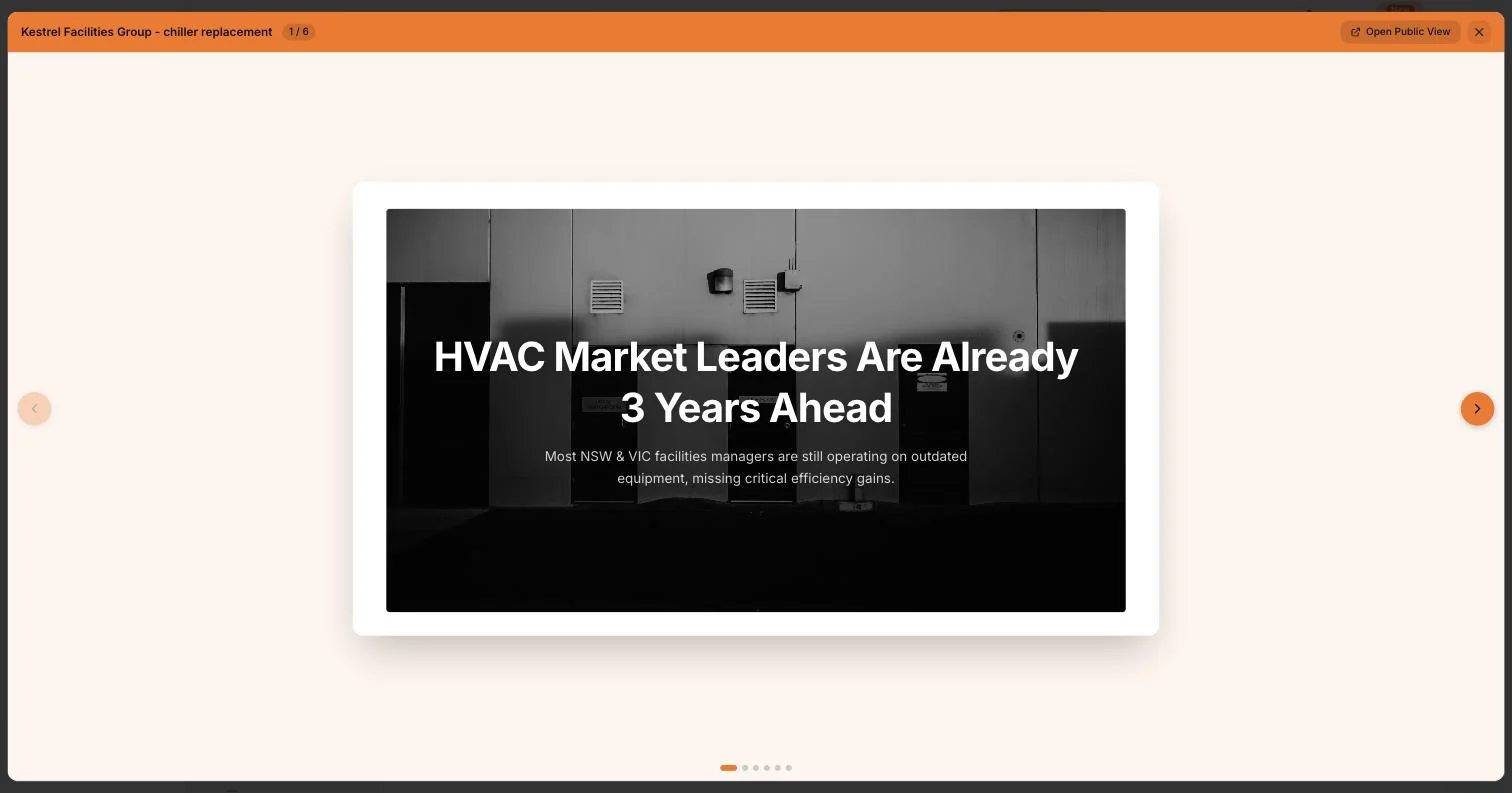
A link opens on a phone in a car park. It is not blocked for size, it does not sit unread in a spam folder, and when you fix a typo the person already holding it sees the corrected version.
- Opens in a browser, on any device, with nothing to download
- Update after sending, so there is no version two floating about
- Shared onwards inside their business, and you see that happen
And you can see it being read
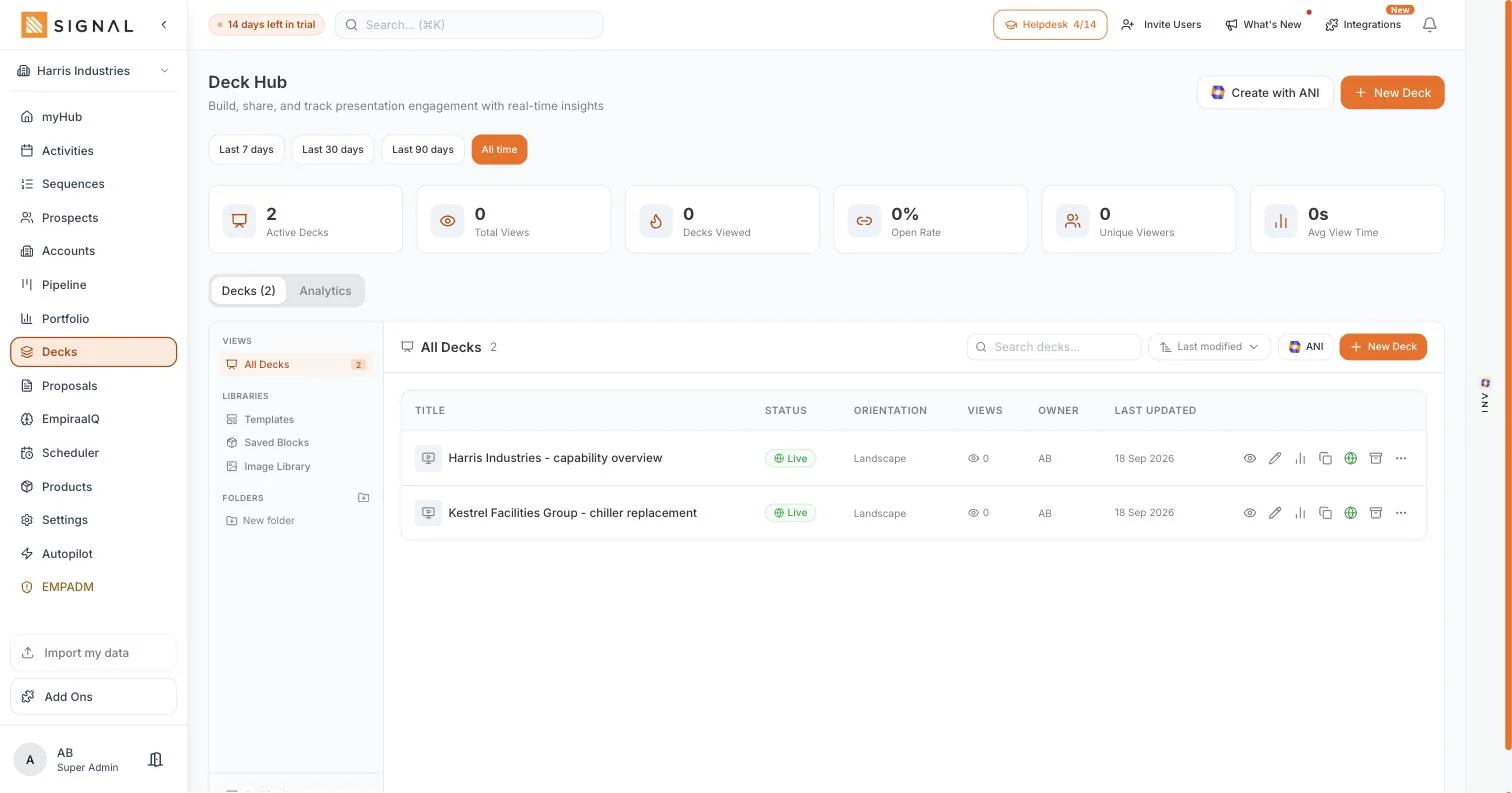
Views, open rate and average time on the deck sit on the Deck Hub. Which means the follow-up call starts from what they were actually interested in rather than from a polite opening question.
- Who opened it and when, per deck
- Average view time, which tells you whether it landed or was skimmed
- Active decks and their owner in one list, so a manager can see what is out there
What you get
What a deck does once it leaves your hands.
In decks
Built from the deal
The company, the contact and the products are already in it before you write a word.
A shareable link
No attachment, no size limit, no stale copy sitting in somebody’s downloads folder.
View tracking
Who opened it, when, and how long they spent. Interest you can act on.
Open rate on the hub
Across every deck, so you can tell a message problem from a list problem.
ANI drafting
A first version from what Signal already knows about the account, for you to edit.
Learn moreOn the deal
The deck lives on the record, so the next person to open it sees what was sent.
Learn moreGetting started
One deck, then reuse it.
Four steps
- 1 hour
Build your standard pitch
The one you give most often. Get it right once and everything after is an edit.
- 10 minutes
Send the next one as a link
From the deal, so it carries the company and the pricing.
- Ongoing
Watch the views
Open rate and time on it tell you whether the story is working.
- Same week
Call the people who read it twice
A second visit is the clearest buying signal you will get for free.
By role
What it changes, seat by seat.
Who feels it
A sales rep
You know whether to chase, and you know what to open the call with.
Learn moreA sales manager
You can see what is going out and how it is landing, without asking for copies.
Learn moreA founder
The pitch stops being rebuilt from scratch every time you get a meeting.
Learn moreAn agency principal
A credentials deck that is current, on brand, and not four versions old.
Learn moreRelated
Keep exploring Signal.
Related pages

Questions
Deck questions, answered.
Do I have to build every deck from nothing?
No. A deck created from a deal already carries the company, the contact and the products on that deal, and you reuse your own slides across deals. ANI can draft a first version for you to edit.
Can I see whether it was opened?
Yes. Views, open rate and average time on the deck are shown per deck and across the Deck Hub, so silence after a send is no longer ambiguous.
Can I change a deck after sending it?
Yes. It is a link rather than an attachment, so an edit reaches everyone already holding it. There is no second version circulating with a different price on it.
How many decks do I get?
Launch includes 15 decks, Drive 75 decks and Command unlimited decks. The limit is on the workspace, so adding people to the team does not use any of it. See the plan limits.
Is this a design tool?
No. It builds a clean sales deck fast and tells you how it was read. If your brand team produces the artwork, use theirs and keep the sending and the tracking here.
What is the difference between a deck and a proposal?
A deck is the pitch. A proposal is the priced document you ask them to accept. Both are built from the deal, both are sent as links, and both tell you when they are opened. More on proposals and quotes.

Question not answered here? Ask ANI and get a straight answer.
Stop sending decks into the dark.
14 days free. No credit card. Unlimited users from the first minute.