

Hitting your revenue target
Work back from the number.
A target announced is not a plan. Your own win rate and average deal size turn it into how much pipeline you need, and coverage tells you whether you have it. Do that arithmetic in month two and the answer is more prospecting. Do it in month ten and the answer is discounting.
14 days free. No credit card.
- 14 days free
- No credit card
- Unlimited users
The problem
The number is set, and then everyone hopes.
Nothing between the target and the week translates one into the other.
Why targets are missed
Nobody does the arithmetic
Target divided by average deal size, divided by win rate, is the pipeline you need. It takes two minutes and almost nobody has the two numbers to do it with.
The shortfall is found too late
A gap discovered in month ten cannot be closed by selling, only by discounting. The same gap in month three is a quarter of extra prospecting.
Effort goes to the same accounts
Activity clusters where it is comfortable. Half the base gets nothing, and nobody sees that until a renewal goes elsewhere.
How it works
Number, pipeline, activity.
Three steps, and each one is a screen rather than a meeting.
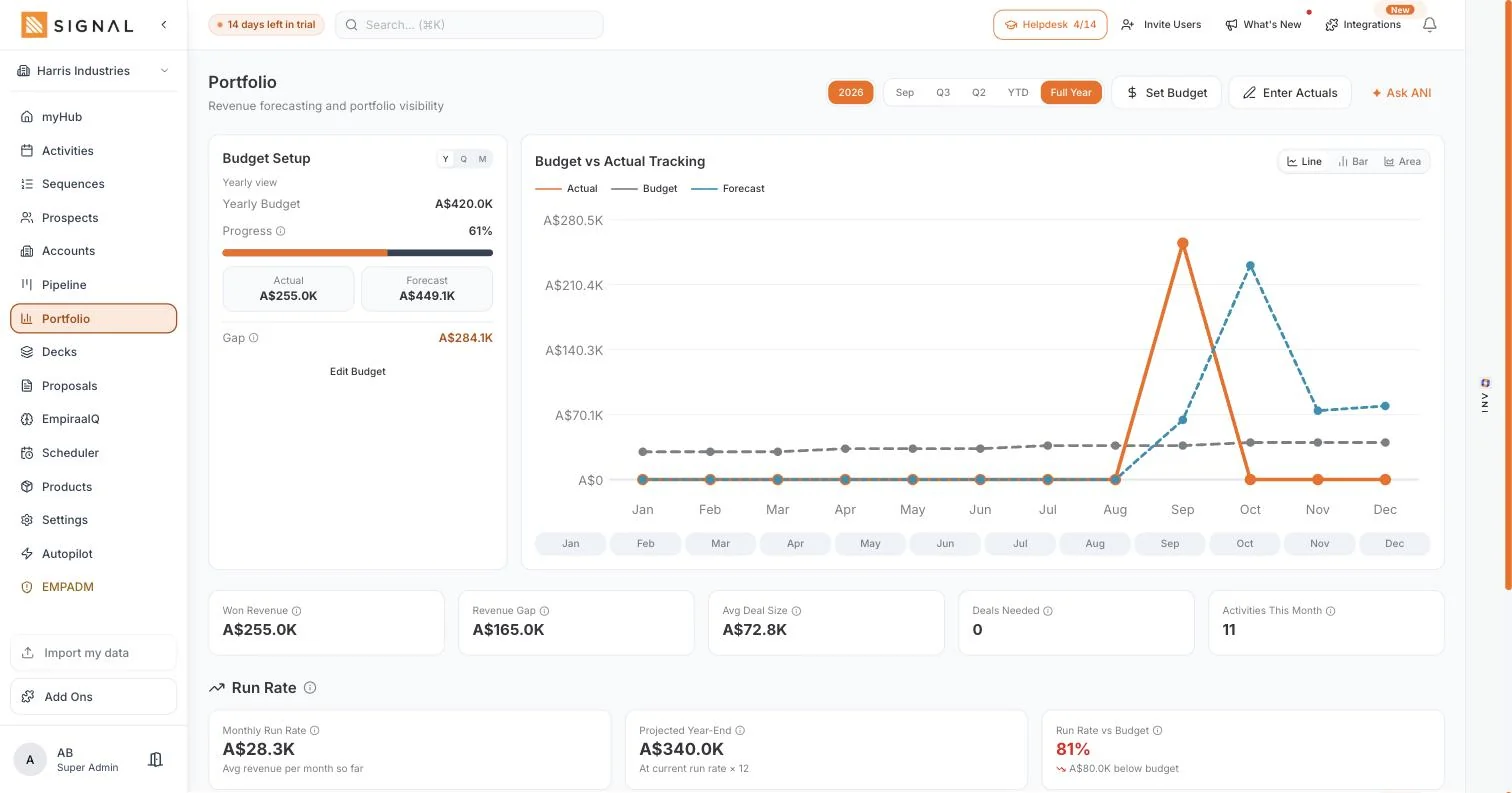
The arithmetic
Start with your own two numbers
Win rate and average deal size, counted from real closes, with the count shown so you know whether to trust them yet. Those two turn a revenue target into a number of deals and a quantity of pipeline.
- Win rate from your closes, not an industry benchmark
- Average deal size, so the deal count is real
- The count behind both, so a small sample is obvious
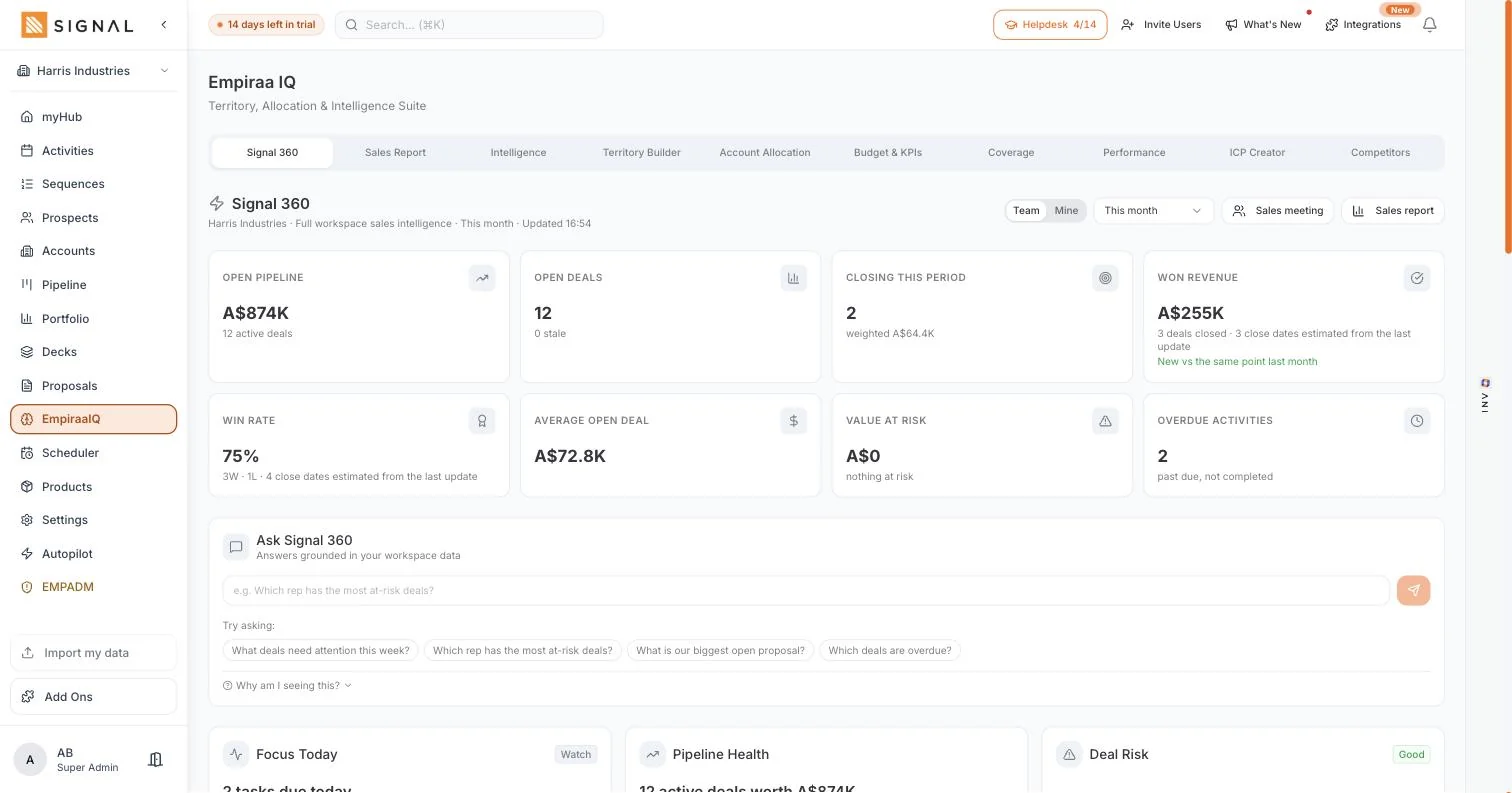
Check whether the pipeline covers it
Set the yearly budget and Portfolio shows actual, forecast and the gap, with run rate against budget underneath. Coverage by stage tells you whether the problem is this month or the two after it.
- Budget, actual, weighted forecast and the gap, on one screen
- Coverage by stage, so a thin Discovery column shows up early
- Run rate against budget, which is the line people act on
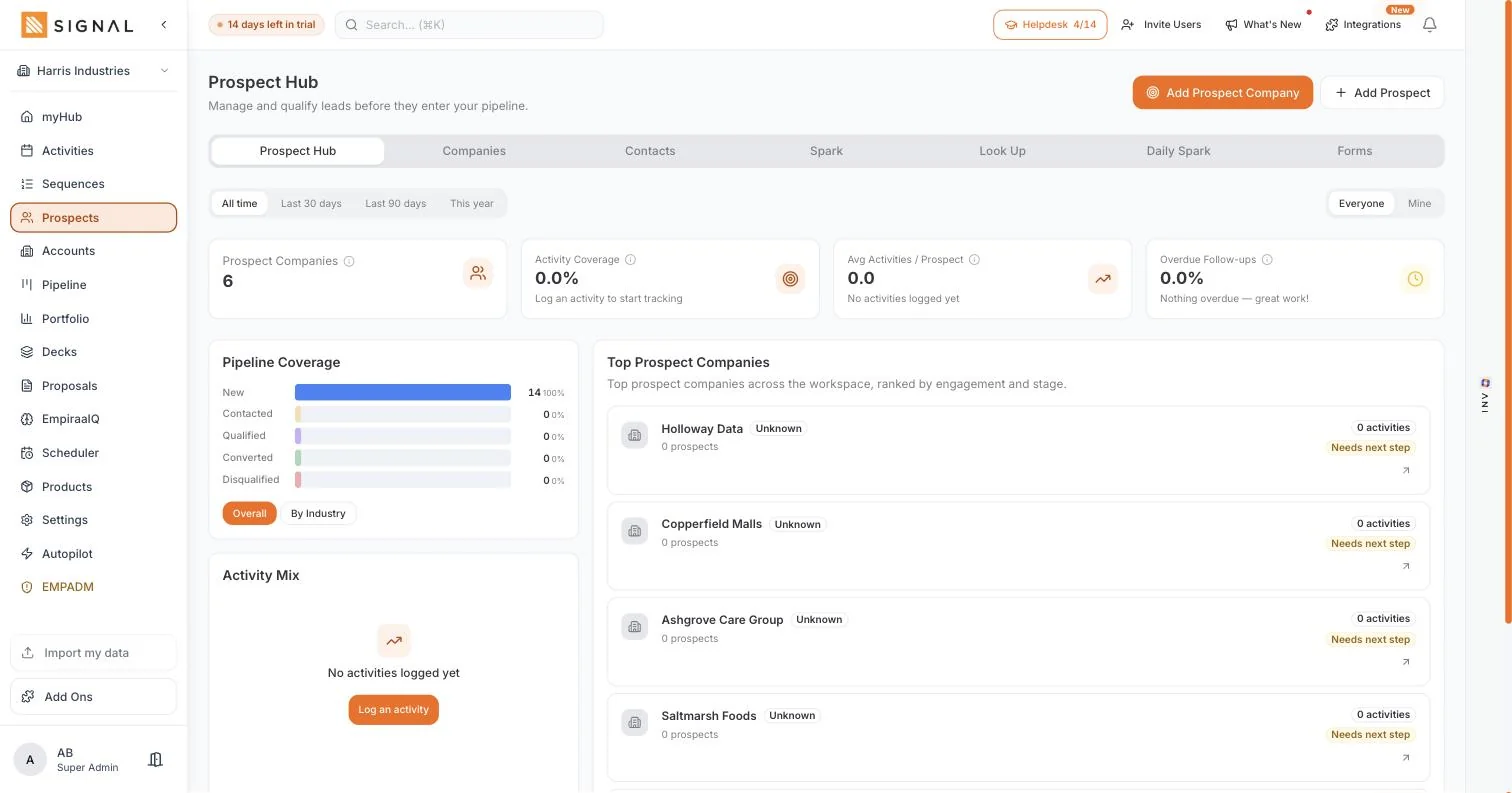
Then turn the gap into a week of work
A shortfall in pipeline is a prospecting decision. Prospect Spark fills the top of the funnel against your ICP, sequences carry the outreach, and activity coverage tells you whether the base is actually being worked.
- Fresh prospects against your ideal customer every month
- Activity coverage, so effort is not all going to the same accounts
- Overdue follow-up counted, because slippage is where deals die
What you get
The numbers that make a target a plan.
For the number
Your real win rate
From your own closes, with the sample size shown beside it.
Learn moreA weighted forecast
At the stage each deal is genuinely in, updating as the team works.
Learn moreThe gap, as a figure
Not implied by two charts. Stated, next to the budget you set.
Learn moreRun rate against budget
Where the year lands at today’s pace, so a soft quarter is visible.
Pipeline coverage by stage
Whether the hole is this month or next quarter.
Learn moreActivity coverage
What share of the base anyone has touched. Usually the most useful number here.
Learn moreGetting started
Do the arithmetic this month.
Four steps
- 2 minutes
Set the target
The number the business is actually working to, not a stretch figure.
- 1 hour
Get the pipeline honest
Real stages, real close dates. This is the uncomfortable hour.
- 10 minutes
Read the gap
Forecast against budget, and coverage by stage underneath it.
- This week
Decide what closes it
More pipeline, better conversion or a price change. Pick one and commit.
Also for
Where else this lands.
Other pages
Questions
Target questions, answered.
How much pipeline do I need?
Your target divided by your average deal size gives the deals you need. Divide that by your win rate and you have the pipeline. Signal gives you both numbers from your own closed deals rather than a benchmark, which is what makes the answer usable.
When is it too late to fix a gap?
Roughly when the remaining time is shorter than your sales cycle. Before that the answer is prospecting; after it the only levers are discounting and pulling deals forward, and both cost you.
What if my win rate is based on twelve deals?
Then treat it carefully, which is why the count is shown next to it. Twelve deals is a hint. Fifty is a number. Signal shows you which one you have rather than quietly presenting a percentage.
Can I set targets per person?
Ownership and coverage are per territory and per member, and the workspace target sits in Portfolio. Start with the business number and work down, because a team target nobody can trace to the business number does not survive contact with a hard month. More on territories.
Does this replace a sales plan?
No. It gives you the arithmetic the plan should be built on. What you do about a gap is a judgement, and that part is still yours.
Do I need extra licences for reporting?
No. Every plan includes unlimited users and Portfolio and Empiraa IQ are part of Signal, so anyone who needs the number can see it. See pricing.

Question not answered here? Ask ANI and get a straight answer.
Turn the target into a week of work.
14 days free. No credit card. Unlimited users from the first minute.